SNAP Benefits in Washington: How to Apply and Qualify
Qualify for SNAP in Washington? See income limits, benefit amounts, and how to apply, use, and manage your benefits.

Edward Cheng
Updated on:
Published on:
SNAP Benefits in Washington: How to Apply and Qualify
Qualify for SNAP in Washington? See income limits, benefit amounts, and how to apply, use, and manage your benefits.
Edward Cheng
Updated on:
Published on:
SNAP Benefits in Washington: How to Apply and Qualify
Qualify for SNAP in Washington? See income limits, benefit amounts, and how to apply, use, and manage your benefits.
Edward Cheng
Updated on:
Published on:
SNAP Benefits in Washington: How to Apply and Qualify
Qualify for SNAP in Washington? See income limits, benefit amounts, and how to apply, use, and manage your benefits.
Edward Cheng
Updated on:
Published on:
SHARE


ON THIS PAGE
The Supplemental Nutrition Assistance Program, or SNAP, provides monthly funds for groceries. If you have a low income, this program can help you and your family afford healthy food.
SNAP Income Limits and Benefit Amounts in Washington
Your eligibility for SNAP benefits in Washington is tied to your household's gross monthly income. The state uses Broad-Based Categorical Eligibility, which means most households qualify if their income is at or below 200% of the Federal Poverty Guidelines.
The maximum benefit amount is determined annually by the USDA based on the Thrifty Food Plan. The income limits shown here are effective as of April 1, 2025, and the benefit amounts are for October 1, 2024, through September 30, 2025.
Household Size 1:
Gross Monthly Income Limit: $2,608
Maximum Benefit Amount: $292Household Size 2:
Gross Monthly Income Limit: $3,525
Maximum Benefit Amount: $536Household Size 3:
Gross Monthly Income Limit: $4,442
Maximum Benefit Amount: $768Household Size 4:
Gross Monthly Income Limit: $5,358
Maximum Benefit Amount: $975Household Size 5:
Gross Monthly Income Limit: $6,275
Maximum Benefit Amount: $1,158Household Size 6:
Gross Monthly Income Limit: $7,192
Maximum Benefit Amount: $1,390Household Size 7:
Gross Monthly Income Limit: $8,108
Maximum Benefit Amount: $1,536Household Size 8:
Gross Monthly Income Limit: $9,025
Maximum Benefit Amount: $1,756For each additional person:
Add $917 to the income limit
Add $220 to the benefit amount
These figures can change. For future amounts, such as for Washington SNAP benefits 2026, or for the most current information, please check the official Washington DSHS website.
Eligibility Criteria for SNAP in Washington
To determine your Washington SNAP benefits eligibility, you must meet several requirements related to your income, residency, and work status.
Income Limits: Most households qualify if their gross monthly income is at or below 200% of the federal poverty level, though households with an elderly or disabled member must also pass a net income test.
Residency Requirements: You must live in Washington state and apply for benefits through the Department of Social and Health Services.
Citizenship Status: U.S. citizens and many qualified non-citizens can receive federal SNAP, while other legal immigrants may be eligible for the state-funded Food Assistance Program.
Work Requirements: Able-bodied adults without dependents have specific work rules, and other adults must typically register for work unless they meet an exemption.
Special Conditions: Seniors and people with disabilities can deduct certain medical expenses, and students in higher education must meet specific criteria to qualify for SNAP benefits eligibility for Washington.
These rules have many details and exceptions. You can find the latest income standards and policy updates on Washington’s official Basic Food program site.
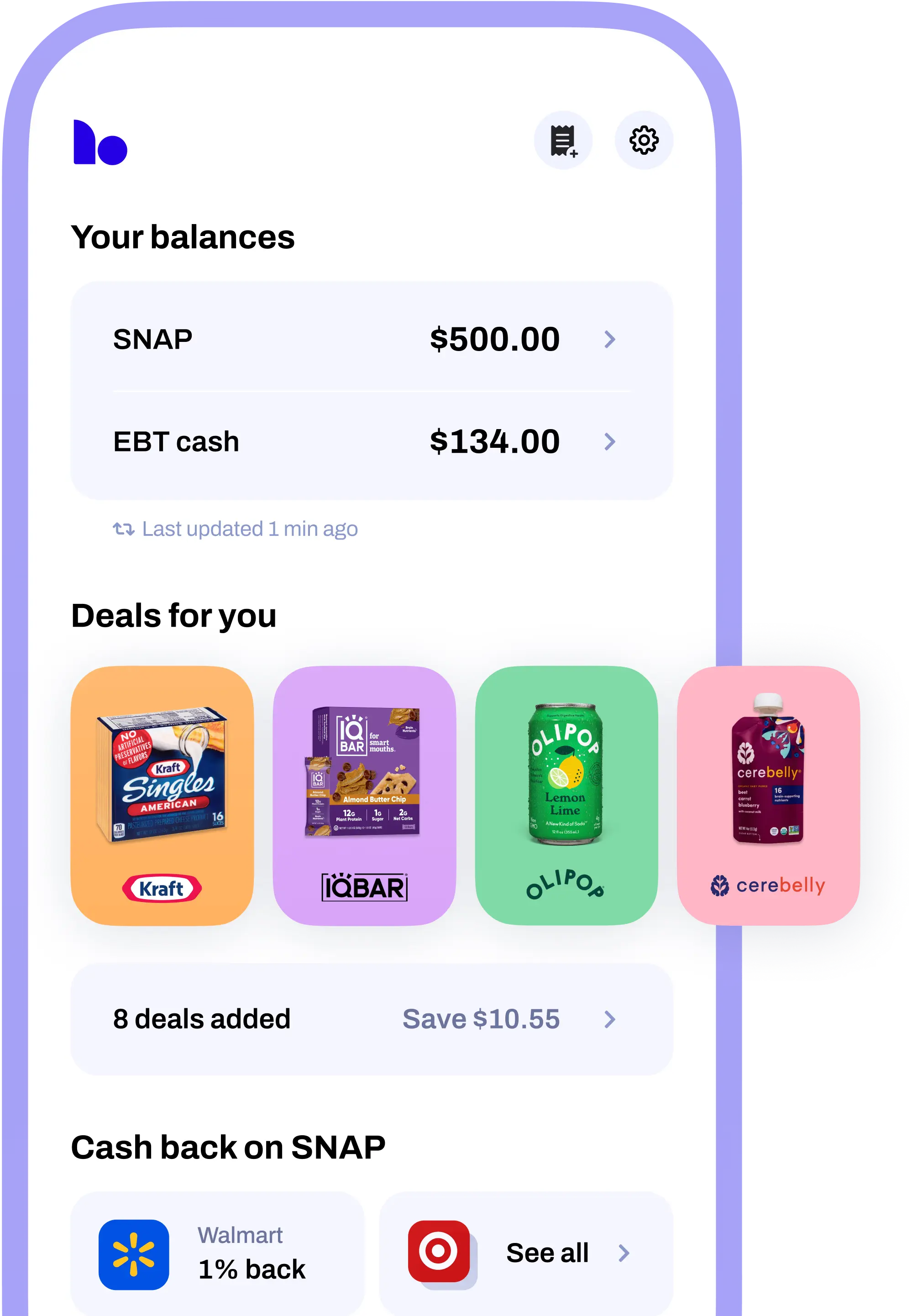
Download Benny app to save on groceries
Get coupons from your favorite brands
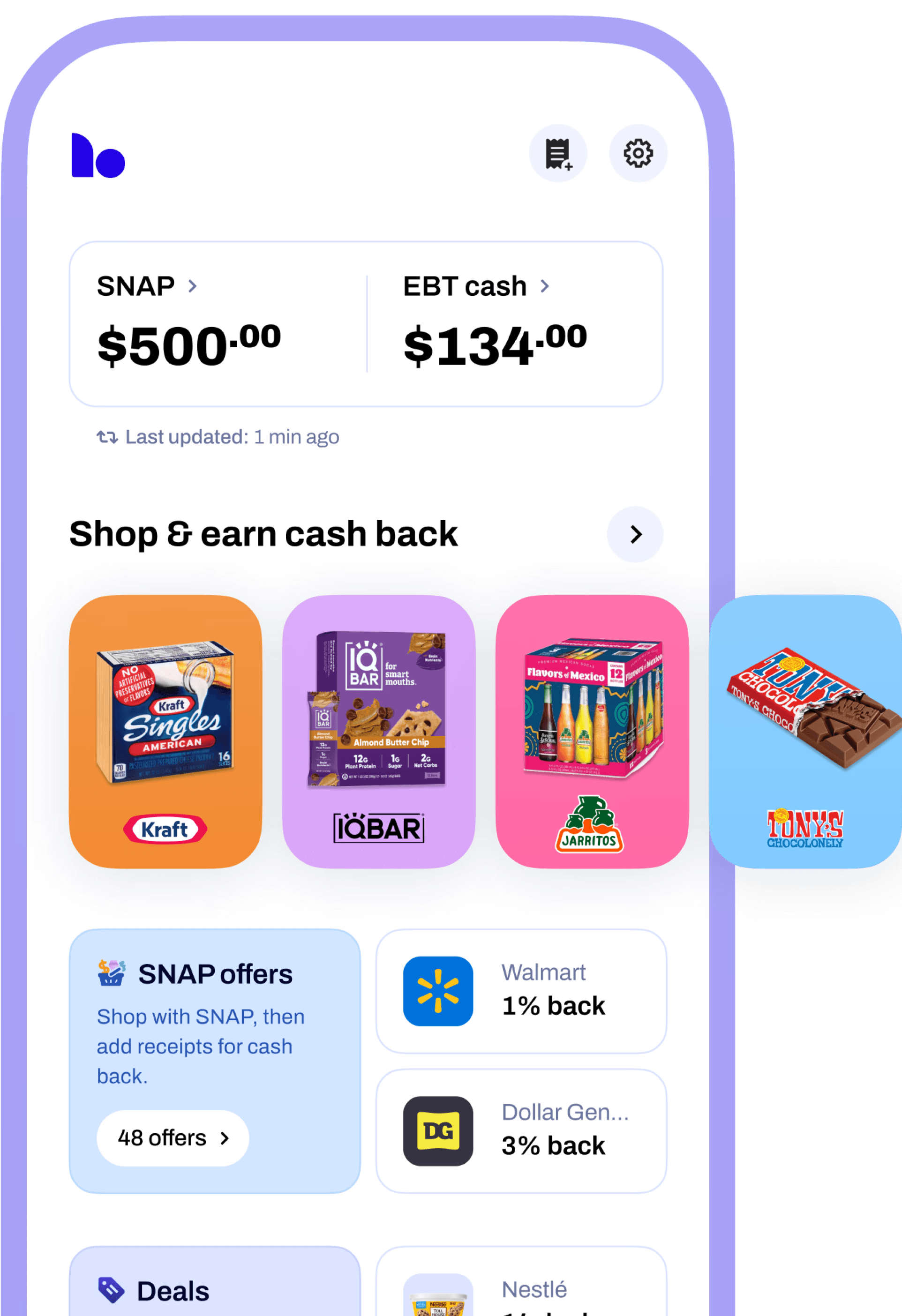
Earn 1-3% cash back on SNAP and track your EBT balance
Get 1% cash back with the Benny Visa card and build your credit score
Download the app
How to Apply for SNAP Benefits in Washington
You can apply for Washington's Basic Food program online, in person at a local office, or by mailing an application.
Online Application
Applying online is the fastest way to submit your information. You can complete the process through the state’s official benefits portal from any computer or mobile device with internet access.
Before you apply, check that you meet the main requirements. You must be a Washington resident, and your household’s gross monthly income should be at or below 200% of the federal poverty level.
You will need to verify your identity, income, and expenses during a follow-up interview. U.S. citizens and many qualified non-citizens are eligible for benefits.
Most adults must meet work requirements. This may involve working or participating in a training program for at least 80 hours per month unless you qualify for an exemption.
In-Person Application
You can apply in person at your local Community Services Office. This method allows you to ask staff questions directly and get help with your application. You can often submit your documents on the same day.
To qualify, you must live in Washington. Your household's gross monthly income also needs to fall under the limit, which is about $5,000 for a family of four.
Bring documents to prove your identity, income, and expenses for your interview. Benefits are open to U.S. citizens and certain non-citizens with a qualified immigration status.
Be aware of work rules for able-bodied adults without dependents. Unless exempt, you are generally required to work, volunteer, or train for 80 hours a month to receive long-term benefits.
By Mail Application
If you prefer a paper application, you can download the form from the state website or request one be mailed to you. Fill it out and send it to your local Community Services Office.
Ensure you meet the residency and income rules before mailing your form. For a household of two, gross monthly income should generally be under $3,287. Check the current Basic Food income chart for details.
Include copies of verification documents with your application. Eligibility is open to Washington residents who are U.S. citizens or qualified non-citizens, and an interview is always required.
Most adults aged 18-54 must comply with work requirements to maintain eligibility. This typically means 80 hours of work or training activities per month, though many exemptions exist.
How to Contact EBT Customer Service in Washington
For help with your application, call the DSHS Community Services Division at 877-501-2233.
Live agents can answer questions about your benefits from 8 a.m. to 5 p.m. PT, Monday through Friday.
See Washington EBT Customer Service Contacts
How to Use Your SNAP Benefits in Washington
Once your benefits are approved, you’ll need to know how to use them, including what you can buy and where.
What is an EBT Card and How to Use it?
Your EBT card, which stands for Electronic Benefit Transfer, is how you'll access your SNAP funds. Think of it just like a debit card. When you shop at an approved grocery store, you'll swipe your card at the checkout counter and enter your private PIN to pay for your food items.
The amount is then deducted directly from your SNAP account balance. It's a simple and secure way to use your benefits without handling cash. You can check your balance with apps like Benny.
What Can You Buy with SNAP Benefits?
Your SNAP benefits are designed to help you buy groceries for your household. You can purchase a wide variety of food items that you prepare and eat at home. This includes pantry staples and fresh produce to help you make healthy meals for your family.
Fruits and vegetables
Meat, poultry, and fish
Dairy products
Breads and cereals
Snack foods and non-alcoholic beverages
Seeds and plants that produce food
It's also important to know what you can't buy with your EBT card. SNAP benefits do not cover non-food items, alcohol, or prepared hot meals. You will need to use a different payment method for these products when you are at the checkout.
Alcoholic beverages, cigarettes, or tobacco
Vitamins, medicines, and supplements
Live animals (with some exceptions for seafood)
Hot foods ready to be eaten
Non-food items like pet food, cleaning supplies, and cosmetics
How to Manage Your SNAP Benefits
Managing your SNAP benefits helps you budget for groceries and stay on top of important dates for deposits and renewals.
EBT Deposit Schedule in Washington
In Washington, SNAP benefits are deposited between the 1st and 20th of each month. Your specific payment date is assigned when your case is approved and stays the same every month, helping you plan your grocery budget.
You can find your specific payment date in our Washington deposit schedule.
See Washington EBT deposit schedule 2026
How to Check Your EBT Card Balance
You can check your balance by logging into the ebtEDGE portal or calling the number on your card. Your balance is also on your latest store receipt. Apps like Benny can show your balance and help you earn cashback.
Check out our guide covering each method on how to check your EBT balance.
Check Your Washington EBT Balance
Manage your SNAP Benefits and Get Cashback with Benny
Benny is a free app that helps you track your EBT balance in real-time and get cash back on eligible purchases at stores like Walmart, Target, and Kroger. To get started, link your EBT card. After you make a purchase, scan your receipt with the app to receive cashback on SNAP-eligible items.
Download Benny to take control of your spending and get more out of your EBT benefits.
Get 1-3% cash back on groceries and track your EBT Balance
Download the app
How to Renew Your SNAP Benefits
In Washington, most households renew SNAP benefits every 12 months. You will receive a notice by mail when it is time for your eligibility review, which will include your specific deadline.
For the review, you will need documents verifying your income, expenses like rent and utilities, and any household changes. This information confirms your continued eligibility for assistance.
Submitting your renewal on time prevents any interruption in your food benefits. You can complete the process online, by mail, or at a local community services office.
Special SNAP Services in Washington
Washington offers special SNAP services for urgent needs. These include expedited benefits for low-income households, disaster relief, and replacement benefits for food loss.
Expedited Service for Basic Food
This service provides benefits within seven days for households with very low income and resources. You may qualify if your monthly income is under $150 with liquid resources of $100 or less, or if you are a migrant farmworker.
The state automatically screens applications for expedited criteria. Apply online, by phone, or at a DSHS office. An interview is required before benefits are issued.
Disaster Supplemental Nutrition Assistance Program (D-SNAP)
After a presidential disaster declaration, D-SNAP helps households in affected areas that lost income or food. Standard SNAP rules on assets, work, or immigration status do not apply for this temporary assistance.
DSHS will announce a short application period and locations. You must apply in person with proof of identity and residence in the disaster zone. Benefits are typically issued within three days.
Replacement SNAP Benefits for Food Loss
If food bought with SNAP is destroyed in a fire, flood, or power outage, you can get replacement benefits. You must report the loss to DSHS, usually within 10 days.
Report the loss online, by phone, or at a Community Services Office and sign an affidavit. The USDA can sometimes waive deadlines for large-scale events. DSHS will then issue replacements to your EBT card.
Transitional Food Assistance (TFA)
Transitional Food Assistance provides five months of benefits to families leaving TANF. This helps you adjust to income changes without losing food support. Eligibility is automatic and not affected by most income changes during this period.
No application is needed. DSHS automatically converts your case and mails a notice. If you believe you qualify but did not receive TFA, contact the Customer Service Center or re-apply online.
Frequently Asked Questions
SHARE
The Supplemental Nutrition Assistance Program, or SNAP, provides monthly funds for groceries. If you have a low income, this program can help you and your family afford healthy food.
SNAP Income Limits and Benefit Amounts in Washington
Your eligibility for SNAP benefits in Washington is tied to your household's gross monthly income. The state uses Broad-Based Categorical Eligibility, which means most households qualify if their income is at or below 200% of the Federal Poverty Guidelines.
The maximum benefit amount is determined annually by the USDA based on the Thrifty Food Plan. The income limits shown here are effective as of April 1, 2025, and the benefit amounts are for October 1, 2024, through September 30, 2025.
Household Size 1:
Gross Monthly Income Limit: $2,608
Maximum Benefit Amount: $292Household Size 2:
Gross Monthly Income Limit: $3,525
Maximum Benefit Amount: $536Household Size 3:
Gross Monthly Income Limit: $4,442
Maximum Benefit Amount: $768Household Size 4:
Gross Monthly Income Limit: $5,358
Maximum Benefit Amount: $975Household Size 5:
Gross Monthly Income Limit: $6,275
Maximum Benefit Amount: $1,158Household Size 6:
Gross Monthly Income Limit: $7,192
Maximum Benefit Amount: $1,390Household Size 7:
Gross Monthly Income Limit: $8,108
Maximum Benefit Amount: $1,536Household Size 8:
Gross Monthly Income Limit: $9,025
Maximum Benefit Amount: $1,756For each additional person:
Add $917 to the income limit
Add $220 to the benefit amount
These figures can change. For future amounts, such as for Washington SNAP benefits 2026, or for the most current information, please check the official Washington DSHS website.
Eligibility Criteria for SNAP in Washington
To determine your Washington SNAP benefits eligibility, you must meet several requirements related to your income, residency, and work status.
Income Limits: Most households qualify if their gross monthly income is at or below 200% of the federal poverty level, though households with an elderly or disabled member must also pass a net income test.
Residency Requirements: You must live in Washington state and apply for benefits through the Department of Social and Health Services.
Citizenship Status: U.S. citizens and many qualified non-citizens can receive federal SNAP, while other legal immigrants may be eligible for the state-funded Food Assistance Program.
Work Requirements: Able-bodied adults without dependents have specific work rules, and other adults must typically register for work unless they meet an exemption.
Special Conditions: Seniors and people with disabilities can deduct certain medical expenses, and students in higher education must meet specific criteria to qualify for SNAP benefits eligibility for Washington.
These rules have many details and exceptions. You can find the latest income standards and policy updates on Washington’s official Basic Food program site.
Download Benny app to save on groceries
Get coupons from your favorite brands
Earn 1-3% cash back on SNAP and track your EBT balance
Get 1% cash back with the Benny Visa card and build your credit score
Download the app
How to Apply for SNAP Benefits in Washington
You can apply for Washington's Basic Food program online, in person at a local office, or by mailing an application.
Online Application
Applying online is the fastest way to submit your information. You can complete the process through the state’s official benefits portal from any computer or mobile device with internet access.
Before you apply, check that you meet the main requirements. You must be a Washington resident, and your household’s gross monthly income should be at or below 200% of the federal poverty level.
You will need to verify your identity, income, and expenses during a follow-up interview. U.S. citizens and many qualified non-citizens are eligible for benefits.
Most adults must meet work requirements. This may involve working or participating in a training program for at least 80 hours per month unless you qualify for an exemption.
In-Person Application
You can apply in person at your local Community Services Office. This method allows you to ask staff questions directly and get help with your application. You can often submit your documents on the same day.
To qualify, you must live in Washington. Your household's gross monthly income also needs to fall under the limit, which is about $5,000 for a family of four.
Bring documents to prove your identity, income, and expenses for your interview. Benefits are open to U.S. citizens and certain non-citizens with a qualified immigration status.
Be aware of work rules for able-bodied adults without dependents. Unless exempt, you are generally required to work, volunteer, or train for 80 hours a month to receive long-term benefits.
By Mail Application
If you prefer a paper application, you can download the form from the state website or request one be mailed to you. Fill it out and send it to your local Community Services Office.
Ensure you meet the residency and income rules before mailing your form. For a household of two, gross monthly income should generally be under $3,287. Check the current Basic Food income chart for details.
Include copies of verification documents with your application. Eligibility is open to Washington residents who are U.S. citizens or qualified non-citizens, and an interview is always required.
Most adults aged 18-54 must comply with work requirements to maintain eligibility. This typically means 80 hours of work or training activities per month, though many exemptions exist.
How to Contact EBT Customer Service in Washington
For help with your application, call the DSHS Community Services Division at 877-501-2233.
Live agents can answer questions about your benefits from 8 a.m. to 5 p.m. PT, Monday through Friday.
See Washington EBT Customer Service Contacts
How to Use Your SNAP Benefits in Washington
Once your benefits are approved, you’ll need to know how to use them, including what you can buy and where.
What is an EBT Card and How to Use it?
Your EBT card, which stands for Electronic Benefit Transfer, is how you'll access your SNAP funds. Think of it just like a debit card. When you shop at an approved grocery store, you'll swipe your card at the checkout counter and enter your private PIN to pay for your food items.
The amount is then deducted directly from your SNAP account balance. It's a simple and secure way to use your benefits without handling cash. You can check your balance with apps like Benny.
What Can You Buy with SNAP Benefits?
Your SNAP benefits are designed to help you buy groceries for your household. You can purchase a wide variety of food items that you prepare and eat at home. This includes pantry staples and fresh produce to help you make healthy meals for your family.
Fruits and vegetables
Meat, poultry, and fish
Dairy products
Breads and cereals
Snack foods and non-alcoholic beverages
Seeds and plants that produce food
It's also important to know what you can't buy with your EBT card. SNAP benefits do not cover non-food items, alcohol, or prepared hot meals. You will need to use a different payment method for these products when you are at the checkout.
Alcoholic beverages, cigarettes, or tobacco
Vitamins, medicines, and supplements
Live animals (with some exceptions for seafood)
Hot foods ready to be eaten
Non-food items like pet food, cleaning supplies, and cosmetics
How to Manage Your SNAP Benefits
Managing your SNAP benefits helps you budget for groceries and stay on top of important dates for deposits and renewals.
EBT Deposit Schedule in Washington
In Washington, SNAP benefits are deposited between the 1st and 20th of each month. Your specific payment date is assigned when your case is approved and stays the same every month, helping you plan your grocery budget.
You can find your specific payment date in our Washington deposit schedule.
See Washington EBT deposit schedule 2026
How to Check Your EBT Card Balance
You can check your balance by logging into the ebtEDGE portal or calling the number on your card. Your balance is also on your latest store receipt. Apps like Benny can show your balance and help you earn cashback.
Check out our guide covering each method on how to check your EBT balance.
Check Your Washington EBT Balance
Manage your SNAP Benefits and Get Cashback with Benny
Benny is a free app that helps you track your EBT balance in real-time and get cash back on eligible purchases at stores like Walmart, Target, and Kroger. To get started, link your EBT card. After you make a purchase, scan your receipt with the app to receive cashback on SNAP-eligible items.
Download Benny to take control of your spending and get more out of your EBT benefits.
Get 1-3% cash back on groceries and track your EBT Balance
Download the app
How to Renew Your SNAP Benefits
In Washington, most households renew SNAP benefits every 12 months. You will receive a notice by mail when it is time for your eligibility review, which will include your specific deadline.
For the review, you will need documents verifying your income, expenses like rent and utilities, and any household changes. This information confirms your continued eligibility for assistance.
Submitting your renewal on time prevents any interruption in your food benefits. You can complete the process online, by mail, or at a local community services office.
Special SNAP Services in Washington
Washington offers special SNAP services for urgent needs. These include expedited benefits for low-income households, disaster relief, and replacement benefits for food loss.
Expedited Service for Basic Food
This service provides benefits within seven days for households with very low income and resources. You may qualify if your monthly income is under $150 with liquid resources of $100 or less, or if you are a migrant farmworker.
The state automatically screens applications for expedited criteria. Apply online, by phone, or at a DSHS office. An interview is required before benefits are issued.
Disaster Supplemental Nutrition Assistance Program (D-SNAP)
After a presidential disaster declaration, D-SNAP helps households in affected areas that lost income or food. Standard SNAP rules on assets, work, or immigration status do not apply for this temporary assistance.
DSHS will announce a short application period and locations. You must apply in person with proof of identity and residence in the disaster zone. Benefits are typically issued within three days.
Replacement SNAP Benefits for Food Loss
If food bought with SNAP is destroyed in a fire, flood, or power outage, you can get replacement benefits. You must report the loss to DSHS, usually within 10 days.
Report the loss online, by phone, or at a Community Services Office and sign an affidavit. The USDA can sometimes waive deadlines for large-scale events. DSHS will then issue replacements to your EBT card.
Transitional Food Assistance (TFA)
Transitional Food Assistance provides five months of benefits to families leaving TANF. This helps you adjust to income changes without losing food support. Eligibility is automatic and not affected by most income changes during this period.
No application is needed. DSHS automatically converts your case and mails a notice. If you believe you qualify but did not receive TFA, contact the Customer Service Center or re-apply online.
Frequently Asked Questions
SHARE
The Supplemental Nutrition Assistance Program, or SNAP, provides monthly funds for groceries. If you have a low income, this program can help you and your family afford healthy food.
SNAP Income Limits and Benefit Amounts in Washington
Your eligibility for SNAP benefits in Washington is tied to your household's gross monthly income. The state uses Broad-Based Categorical Eligibility, which means most households qualify if their income is at or below 200% of the Federal Poverty Guidelines.
The maximum benefit amount is determined annually by the USDA based on the Thrifty Food Plan. The income limits shown here are effective as of April 1, 2025, and the benefit amounts are for October 1, 2024, through September 30, 2025.
Household Size 1:
Gross Monthly Income Limit: $2,608
Maximum Benefit Amount: $292Household Size 2:
Gross Monthly Income Limit: $3,525
Maximum Benefit Amount: $536Household Size 3:
Gross Monthly Income Limit: $4,442
Maximum Benefit Amount: $768Household Size 4:
Gross Monthly Income Limit: $5,358
Maximum Benefit Amount: $975Household Size 5:
Gross Monthly Income Limit: $6,275
Maximum Benefit Amount: $1,158Household Size 6:
Gross Monthly Income Limit: $7,192
Maximum Benefit Amount: $1,390Household Size 7:
Gross Monthly Income Limit: $8,108
Maximum Benefit Amount: $1,536Household Size 8:
Gross Monthly Income Limit: $9,025
Maximum Benefit Amount: $1,756For each additional person:
Add $917 to the income limit
Add $220 to the benefit amount
These figures can change. For future amounts, such as for Washington SNAP benefits 2026, or for the most current information, please check the official Washington DSHS website.
Eligibility Criteria for SNAP in Washington
To determine your Washington SNAP benefits eligibility, you must meet several requirements related to your income, residency, and work status.
Income Limits: Most households qualify if their gross monthly income is at or below 200% of the federal poverty level, though households with an elderly or disabled member must also pass a net income test.
Residency Requirements: You must live in Washington state and apply for benefits through the Department of Social and Health Services.
Citizenship Status: U.S. citizens and many qualified non-citizens can receive federal SNAP, while other legal immigrants may be eligible for the state-funded Food Assistance Program.
Work Requirements: Able-bodied adults without dependents have specific work rules, and other adults must typically register for work unless they meet an exemption.
Special Conditions: Seniors and people with disabilities can deduct certain medical expenses, and students in higher education must meet specific criteria to qualify for SNAP benefits eligibility for Washington.
These rules have many details and exceptions. You can find the latest income standards and policy updates on Washington’s official Basic Food program site.
Download Benny app to save on groceries
Get coupons from your favorite brands
Earn 1-3% cash back on SNAP and track your EBT balance
Get 1% cash back with the Benny Visa card and build your credit score
Download the app
How to Apply for SNAP Benefits in Washington
You can apply for Washington's Basic Food program online, in person at a local office, or by mailing an application.
Online Application
Applying online is the fastest way to submit your information. You can complete the process through the state’s official benefits portal from any computer or mobile device with internet access.
Before you apply, check that you meet the main requirements. You must be a Washington resident, and your household’s gross monthly income should be at or below 200% of the federal poverty level.
You will need to verify your identity, income, and expenses during a follow-up interview. U.S. citizens and many qualified non-citizens are eligible for benefits.
Most adults must meet work requirements. This may involve working or participating in a training program for at least 80 hours per month unless you qualify for an exemption.
In-Person Application
You can apply in person at your local Community Services Office. This method allows you to ask staff questions directly and get help with your application. You can often submit your documents on the same day.
To qualify, you must live in Washington. Your household's gross monthly income also needs to fall under the limit, which is about $5,000 for a family of four.
Bring documents to prove your identity, income, and expenses for your interview. Benefits are open to U.S. citizens and certain non-citizens with a qualified immigration status.
Be aware of work rules for able-bodied adults without dependents. Unless exempt, you are generally required to work, volunteer, or train for 80 hours a month to receive long-term benefits.
By Mail Application
If you prefer a paper application, you can download the form from the state website or request one be mailed to you. Fill it out and send it to your local Community Services Office.
Ensure you meet the residency and income rules before mailing your form. For a household of two, gross monthly income should generally be under $3,287. Check the current Basic Food income chart for details.
Include copies of verification documents with your application. Eligibility is open to Washington residents who are U.S. citizens or qualified non-citizens, and an interview is always required.
Most adults aged 18-54 must comply with work requirements to maintain eligibility. This typically means 80 hours of work or training activities per month, though many exemptions exist.
How to Contact EBT Customer Service in Washington
For help with your application, call the DSHS Community Services Division at 877-501-2233.
Live agents can answer questions about your benefits from 8 a.m. to 5 p.m. PT, Monday through Friday.
See Washington EBT Customer Service Contacts
How to Use Your SNAP Benefits in Washington
Once your benefits are approved, you’ll need to know how to use them, including what you can buy and where.
What is an EBT Card and How to Use it?
Your EBT card, which stands for Electronic Benefit Transfer, is how you'll access your SNAP funds. Think of it just like a debit card. When you shop at an approved grocery store, you'll swipe your card at the checkout counter and enter your private PIN to pay for your food items.
The amount is then deducted directly from your SNAP account balance. It's a simple and secure way to use your benefits without handling cash. You can check your balance with apps like Benny.
What Can You Buy with SNAP Benefits?
Your SNAP benefits are designed to help you buy groceries for your household. You can purchase a wide variety of food items that you prepare and eat at home. This includes pantry staples and fresh produce to help you make healthy meals for your family.
Fruits and vegetables
Meat, poultry, and fish
Dairy products
Breads and cereals
Snack foods and non-alcoholic beverages
Seeds and plants that produce food
It's also important to know what you can't buy with your EBT card. SNAP benefits do not cover non-food items, alcohol, or prepared hot meals. You will need to use a different payment method for these products when you are at the checkout.
Alcoholic beverages, cigarettes, or tobacco
Vitamins, medicines, and supplements
Live animals (with some exceptions for seafood)
Hot foods ready to be eaten
Non-food items like pet food, cleaning supplies, and cosmetics
How to Manage Your SNAP Benefits
Managing your SNAP benefits helps you budget for groceries and stay on top of important dates for deposits and renewals.
EBT Deposit Schedule in Washington
In Washington, SNAP benefits are deposited between the 1st and 20th of each month. Your specific payment date is assigned when your case is approved and stays the same every month, helping you plan your grocery budget.
You can find your specific payment date in our Washington deposit schedule.
See Washington EBT deposit schedule 2026
How to Check Your EBT Card Balance
You can check your balance by logging into the ebtEDGE portal or calling the number on your card. Your balance is also on your latest store receipt. Apps like Benny can show your balance and help you earn cashback.
Check out our guide covering each method on how to check your EBT balance.
Check Your Washington EBT Balance
Manage your SNAP Benefits and Get Cashback with Benny
Benny is a free app that helps you track your EBT balance in real-time and get cash back on eligible purchases at stores like Walmart, Target, and Kroger. To get started, link your EBT card. After you make a purchase, scan your receipt with the app to receive cashback on SNAP-eligible items.
Download Benny to take control of your spending and get more out of your EBT benefits.
Get 1-3% cash back on groceries and track your EBT Balance
Download the app
How to Renew Your SNAP Benefits
In Washington, most households renew SNAP benefits every 12 months. You will receive a notice by mail when it is time for your eligibility review, which will include your specific deadline.
For the review, you will need documents verifying your income, expenses like rent and utilities, and any household changes. This information confirms your continued eligibility for assistance.
Submitting your renewal on time prevents any interruption in your food benefits. You can complete the process online, by mail, or at a local community services office.
Special SNAP Services in Washington
Washington offers special SNAP services for urgent needs. These include expedited benefits for low-income households, disaster relief, and replacement benefits for food loss.
Expedited Service for Basic Food
This service provides benefits within seven days for households with very low income and resources. You may qualify if your monthly income is under $150 with liquid resources of $100 or less, or if you are a migrant farmworker.
The state automatically screens applications for expedited criteria. Apply online, by phone, or at a DSHS office. An interview is required before benefits are issued.
Disaster Supplemental Nutrition Assistance Program (D-SNAP)
After a presidential disaster declaration, D-SNAP helps households in affected areas that lost income or food. Standard SNAP rules on assets, work, or immigration status do not apply for this temporary assistance.
DSHS will announce a short application period and locations. You must apply in person with proof of identity and residence in the disaster zone. Benefits are typically issued within three days.
Replacement SNAP Benefits for Food Loss
If food bought with SNAP is destroyed in a fire, flood, or power outage, you can get replacement benefits. You must report the loss to DSHS, usually within 10 days.
Report the loss online, by phone, or at a Community Services Office and sign an affidavit. The USDA can sometimes waive deadlines for large-scale events. DSHS will then issue replacements to your EBT card.
Transitional Food Assistance (TFA)
Transitional Food Assistance provides five months of benefits to families leaving TANF. This helps you adjust to income changes without losing food support. Eligibility is automatic and not affected by most income changes during this period.
No application is needed. DSHS automatically converts your case and mails a notice. If you believe you qualify but did not receive TFA, contact the Customer Service Center or re-apply online.
Frequently Asked Questions
SHARE
The Supplemental Nutrition Assistance Program, or SNAP, provides monthly funds for groceries. If you have a low income, this program can help you and your family afford healthy food.
SNAP Income Limits and Benefit Amounts in Washington
Your eligibility for SNAP benefits in Washington is tied to your household's gross monthly income. The state uses Broad-Based Categorical Eligibility, which means most households qualify if their income is at or below 200% of the Federal Poverty Guidelines.
The maximum benefit amount is determined annually by the USDA based on the Thrifty Food Plan. The income limits shown here are effective as of April 1, 2025, and the benefit amounts are for October 1, 2024, through September 30, 2025.
Household Size 1:
Gross Monthly Income Limit: $2,608
Maximum Benefit Amount: $292Household Size 2:
Gross Monthly Income Limit: $3,525
Maximum Benefit Amount: $536Household Size 3:
Gross Monthly Income Limit: $4,442
Maximum Benefit Amount: $768Household Size 4:
Gross Monthly Income Limit: $5,358
Maximum Benefit Amount: $975Household Size 5:
Gross Monthly Income Limit: $6,275
Maximum Benefit Amount: $1,158Household Size 6:
Gross Monthly Income Limit: $7,192
Maximum Benefit Amount: $1,390Household Size 7:
Gross Monthly Income Limit: $8,108
Maximum Benefit Amount: $1,536Household Size 8:
Gross Monthly Income Limit: $9,025
Maximum Benefit Amount: $1,756For each additional person:
Add $917 to the income limit
Add $220 to the benefit amount
These figures can change. For future amounts, such as for Washington SNAP benefits 2026, or for the most current information, please check the official Washington DSHS website.
Eligibility Criteria for SNAP in Washington
To determine your Washington SNAP benefits eligibility, you must meet several requirements related to your income, residency, and work status.
Income Limits: Most households qualify if their gross monthly income is at or below 200% of the federal poverty level, though households with an elderly or disabled member must also pass a net income test.
Residency Requirements: You must live in Washington state and apply for benefits through the Department of Social and Health Services.
Citizenship Status: U.S. citizens and many qualified non-citizens can receive federal SNAP, while other legal immigrants may be eligible for the state-funded Food Assistance Program.
Work Requirements: Able-bodied adults without dependents have specific work rules, and other adults must typically register for work unless they meet an exemption.
Special Conditions: Seniors and people with disabilities can deduct certain medical expenses, and students in higher education must meet specific criteria to qualify for SNAP benefits eligibility for Washington.
These rules have many details and exceptions. You can find the latest income standards and policy updates on Washington’s official Basic Food program site.
Download Benny app to save on groceries
Get coupons from your favorite brands
Earn 1-3% cash back on SNAP and track your EBT balance
Get 1% cash back with the Benny Visa card and build your credit score
Download the app
How to Apply for SNAP Benefits in Washington
You can apply for Washington's Basic Food program online, in person at a local office, or by mailing an application.
Online Application
Applying online is the fastest way to submit your information. You can complete the process through the state’s official benefits portal from any computer or mobile device with internet access.
Before you apply, check that you meet the main requirements. You must be a Washington resident, and your household’s gross monthly income should be at or below 200% of the federal poverty level.
You will need to verify your identity, income, and expenses during a follow-up interview. U.S. citizens and many qualified non-citizens are eligible for benefits.
Most adults must meet work requirements. This may involve working or participating in a training program for at least 80 hours per month unless you qualify for an exemption.
In-Person Application
You can apply in person at your local Community Services Office. This method allows you to ask staff questions directly and get help with your application. You can often submit your documents on the same day.
To qualify, you must live in Washington. Your household's gross monthly income also needs to fall under the limit, which is about $5,000 for a family of four.
Bring documents to prove your identity, income, and expenses for your interview. Benefits are open to U.S. citizens and certain non-citizens with a qualified immigration status.
Be aware of work rules for able-bodied adults without dependents. Unless exempt, you are generally required to work, volunteer, or train for 80 hours a month to receive long-term benefits.
By Mail Application
If you prefer a paper application, you can download the form from the state website or request one be mailed to you. Fill it out and send it to your local Community Services Office.
Ensure you meet the residency and income rules before mailing your form. For a household of two, gross monthly income should generally be under $3,287. Check the current Basic Food income chart for details.
Include copies of verification documents with your application. Eligibility is open to Washington residents who are U.S. citizens or qualified non-citizens, and an interview is always required.
Most adults aged 18-54 must comply with work requirements to maintain eligibility. This typically means 80 hours of work or training activities per month, though many exemptions exist.
How to Contact EBT Customer Service in Washington
For help with your application, call the DSHS Community Services Division at 877-501-2233.
Live agents can answer questions about your benefits from 8 a.m. to 5 p.m. PT, Monday through Friday.
See Washington EBT Customer Service Contacts
How to Use Your SNAP Benefits in Washington
Once your benefits are approved, you’ll need to know how to use them, including what you can buy and where.
What is an EBT Card and How to Use it?
Your EBT card, which stands for Electronic Benefit Transfer, is how you'll access your SNAP funds. Think of it just like a debit card. When you shop at an approved grocery store, you'll swipe your card at the checkout counter and enter your private PIN to pay for your food items.
The amount is then deducted directly from your SNAP account balance. It's a simple and secure way to use your benefits without handling cash. You can check your balance with apps like Benny.
What Can You Buy with SNAP Benefits?
Your SNAP benefits are designed to help you buy groceries for your household. You can purchase a wide variety of food items that you prepare and eat at home. This includes pantry staples and fresh produce to help you make healthy meals for your family.
Fruits and vegetables
Meat, poultry, and fish
Dairy products
Breads and cereals
Snack foods and non-alcoholic beverages
Seeds and plants that produce food
It's also important to know what you can't buy with your EBT card. SNAP benefits do not cover non-food items, alcohol, or prepared hot meals. You will need to use a different payment method for these products when you are at the checkout.
Alcoholic beverages, cigarettes, or tobacco
Vitamins, medicines, and supplements
Live animals (with some exceptions for seafood)
Hot foods ready to be eaten
Non-food items like pet food, cleaning supplies, and cosmetics
How to Manage Your SNAP Benefits
Managing your SNAP benefits helps you budget for groceries and stay on top of important dates for deposits and renewals.
EBT Deposit Schedule in Washington
In Washington, SNAP benefits are deposited between the 1st and 20th of each month. Your specific payment date is assigned when your case is approved and stays the same every month, helping you plan your grocery budget.
You can find your specific payment date in our Washington deposit schedule.
See Washington EBT deposit schedule 2026
How to Check Your EBT Card Balance
You can check your balance by logging into the ebtEDGE portal or calling the number on your card. Your balance is also on your latest store receipt. Apps like Benny can show your balance and help you earn cashback.
Check out our guide covering each method on how to check your EBT balance.
Check Your Washington EBT Balance
Manage your SNAP Benefits and Get Cashback with Benny
Benny is a free app that helps you track your EBT balance in real-time and get cash back on eligible purchases at stores like Walmart, Target, and Kroger. To get started, link your EBT card. After you make a purchase, scan your receipt with the app to receive cashback on SNAP-eligible items.
Download Benny to take control of your spending and get more out of your EBT benefits.
Get 1-3% cash back on groceries and track your EBT Balance
Download the app
How to Renew Your SNAP Benefits
In Washington, most households renew SNAP benefits every 12 months. You will receive a notice by mail when it is time for your eligibility review, which will include your specific deadline.
For the review, you will need documents verifying your income, expenses like rent and utilities, and any household changes. This information confirms your continued eligibility for assistance.
Submitting your renewal on time prevents any interruption in your food benefits. You can complete the process online, by mail, or at a local community services office.
Special SNAP Services in Washington
Washington offers special SNAP services for urgent needs. These include expedited benefits for low-income households, disaster relief, and replacement benefits for food loss.
Expedited Service for Basic Food
This service provides benefits within seven days for households with very low income and resources. You may qualify if your monthly income is under $150 with liquid resources of $100 or less, or if you are a migrant farmworker.
The state automatically screens applications for expedited criteria. Apply online, by phone, or at a DSHS office. An interview is required before benefits are issued.
Disaster Supplemental Nutrition Assistance Program (D-SNAP)
After a presidential disaster declaration, D-SNAP helps households in affected areas that lost income or food. Standard SNAP rules on assets, work, or immigration status do not apply for this temporary assistance.
DSHS will announce a short application period and locations. You must apply in person with proof of identity and residence in the disaster zone. Benefits are typically issued within three days.
Replacement SNAP Benefits for Food Loss
If food bought with SNAP is destroyed in a fire, flood, or power outage, you can get replacement benefits. You must report the loss to DSHS, usually within 10 days.
Report the loss online, by phone, or at a Community Services Office and sign an affidavit. The USDA can sometimes waive deadlines for large-scale events. DSHS will then issue replacements to your EBT card.
Transitional Food Assistance (TFA)
Transitional Food Assistance provides five months of benefits to families leaving TANF. This helps you adjust to income changes without losing food support. Eligibility is automatic and not affected by most income changes during this period.
No application is needed. DSHS automatically converts your case and mails a notice. If you believe you qualify but did not receive TFA, contact the Customer Service Center or re-apply online.