Indiana EBT Deposit Schedule for 2026
Find Indiana's 2026 EBT payment schedule and get answers on late deposits or what to do if your funds run out early.

Steve Austin
Updated on:
Published on:

Indiana EBT Deposit Schedule for 2026
Find Indiana's 2026 EBT payment schedule and get answers on late deposits or what to do if your funds run out early.
Steve Austin
Updated on:
Published on:
Indiana EBT Deposit Schedule for 2026
Find Indiana's 2026 EBT payment schedule and get answers on late deposits or what to do if your funds run out early.
Steve Austin
Updated on:
Published on:
Indiana EBT Deposit Schedule for 2026
Find Indiana's 2026 EBT payment schedule and get answers on late deposits or what to do if your funds run out early.
Steve Austin
Updated on:
Published on:
SHARE


ON THIS PAGE
Knowing your Indiana SNAP payment schedule helps you plan grocery trips and budget effectively. It gives you peace of mind, so you're never caught off guard at the checkout counter and know exactly when your benefits will arrive.
In this guide, you'll learn about the EBT deposit dates and find solutions for common reasons why your deposit might be late.
Monthly EBT Deposit Schedule in Indiana
The EBT payment schedule in Indiana is determined by the first letter of your last name. Your Supplemental Nutrition Assistance Program (SNAP) benefits are loaded onto your Hoosier Works card between the 5th and the 23rd of each month.
Your specific payment day is scheduled as follows:
A–B: 5th of the month
C–D: 7th of the month
E–G: 9th of the month
H–I: 11th of the month
J–L: 13th of the month
M–N: 15th of the month
O–R: 17th of the month
S: 19th of the month
T–V: 21st of the month
W–Z: 23rd of the month
If you receive Temporary Assistance for Needy Families (TANF), your cash benefits are deposited separately from your SNAP payment schedule. These are always available on the first calendar day of each month.
You can find the official SNAP deposit dates on the FSSA benefit calendar. For other questions, call the Indiana Division of Family Resources at 1-800-403-0864.
How to Check Your EBT Deposit Status in Indiana
You can confirm your deposit has arrived through a few different methods. This helps you stay on top of your balance after your scheduled EBT deposit dates. For a complete list of options, see our guide on how to check your EBT balance in Indiana. Here are three of the most convenient ways to view your balance:
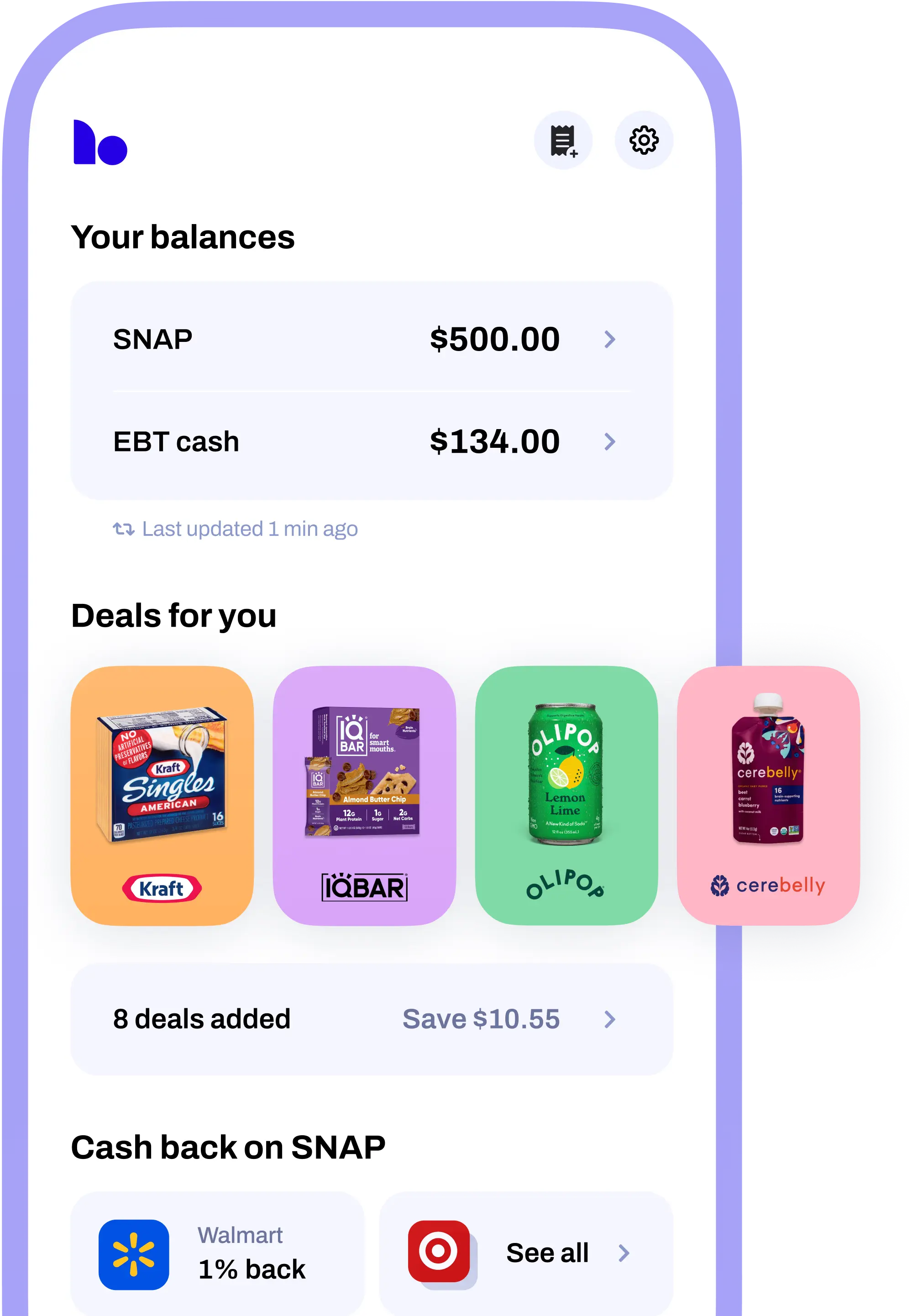
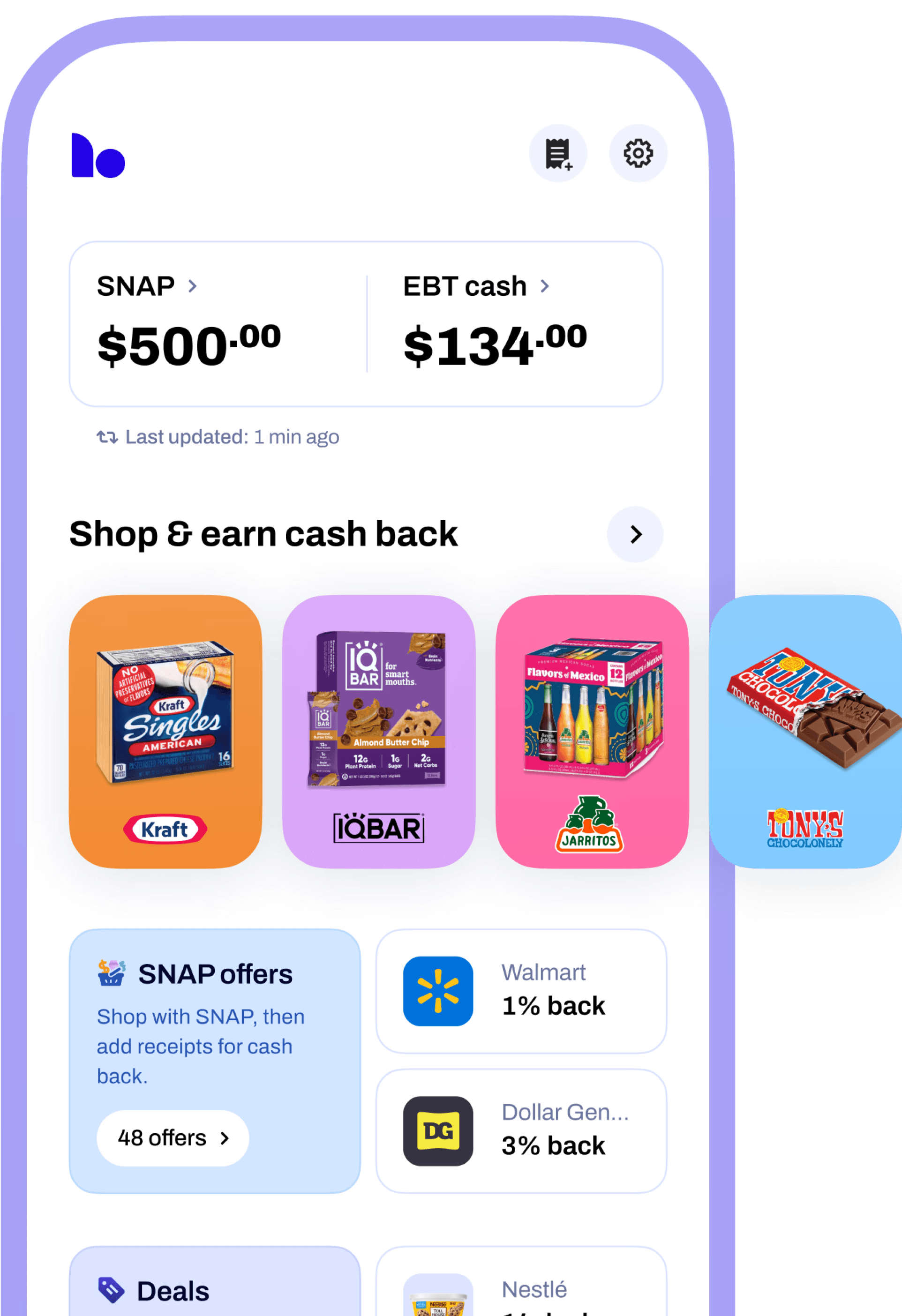
Download the Benny mobile app and create an account with your card number and ZIP code. You can see your real-time SNAP and cash balances. The app also provides automatic cash-back on eligible EBT purchases at participating stores.
Visit the ConnectEBT.com website and select Indiana. Log in or create a user account with your card details. Your SNAP and TANF balances appear on the Account Summary screen. This is useful if your SNAP payment schedule changes.
Call the 24-hour customer service line at 877-768-5098. Follow the automated prompts to enter your 16-digit card number and PIN. The system then reads your current SNAP and TANF balances aloud. This is a quick check after your expected SNAP payment dates.
Download Benny to save on groceries
Get coupons from your favorite brands
Earn 1-3% cash back on SNAP and track your EBT balance
Get 1% cash back with the Benny Visa card and build your credit score
Download the app
Why Your EBT Deposit Might Be Late and What to Do
Several factors, from simple paperwork errors to statewide system issues, can cause your benefits to arrive later than expected.
Administrative Or Eligibility Snags
Your benefits can be put on hold if there are issues with your case file. This often happens due to late or incomplete recertification packets, missing proof of income, or an outdated address. Your case may be frozen until the correct information is received and processed, which can affect your regular SNAP payment dates.
Case Changes And Redeterminations
Reporting a significant life event can also trigger a temporary delay. Changes like adding a new baby, starting a new job, or moving require your eligibility to be recalculated. Your deposit may be paused until this redetermination is complete, altering your typical EBT payment schedule.
Statewide System And Processing Issues
Sometimes the delay is caused by broader problems. A surge in applications can create a processing backlog for the state of Indiana, while system maintenance or technical glitches can also halt payments. These issues can disrupt the established EBT deposit dates for many recipients.
Account-Level Holds Or Fraud Flags
Your account itself might be flagged for a security reason, preventing a new deposit. This could be due to a locked PIN or a fraud investigation into questionable transactions. The hold will remain until you resolve the issue, impacting your expected SNAP payment schedule.
Do EBT Benefits Expire or Roll Over?
In Indiana, any unused SNAP or TANF benefits on your Hoosier Works card will carry over to the next month. The balance remains available as long as the account is considered active. This rollover process is separate from the state's EBT payment schedule.
Your account stays active whenever you make a purchase. However, if your card is not used for nine consecutive months, the state will permanently remove those funds. This policy applies regardless of the original SNAP deposit dates for those benefits.
The state is required to send a written warning at least 30 days before removing your benefits. You can prevent this expungement simply by making a single transaction with your card before the deadline.
Even if your SNAP or TANF case closes, you can still spend any remaining balance on your Hoosier Works card. These funds are available until they are spent or reach the nine-month inactivity limit.
Get 1-3% cash back on groceries and track your EBT balance
Download the app
What to Do if Your EBT Balance Runs Out Early
It can be stressful when your EBT balance is gone before the end of the month. This situation is challenging, but you are not without support. Several options are available to help you get food on the table while you wait for your benefits to reload.
Request an Emergency SNAP Issuance
If you have no food and very little cash, you may be able to get an emergency benefit payment. This process, known as requesting expedited SNAP, can provide fast relief that does not affect your regular Indiana SNAP payment schedule.
Call the Division of Family Resources (DFR) at 800-403-0864 and state that you need “expedited SNAP.” You must also start a new application online or in person on the same day.
You may qualify if your household has under $150 in gross monthly income and under $100 in liquid assets, or if your rent and utilities exceed your income. DFR must interview you within one day.
Bring proof of identity, like a driver’s license. If approved, the emergency allotment appears on your Hoosier Works card, often within 72 hours, and no later than seven days.
Report Household Changes
If your household situation has changed, reporting it could increase your benefit amount. You are required to report changes within 10 days, which can lead to a recalculation of your benefits and an adjustment to your EBT payment schedule.
Log in to the FSSA Benefits Portal or call DFR to report a change. Qualifying changes include a drop in income, reduced hours, higher shelter costs, or a change in household size.
Provide verification, such as a new pay stub, termination letter, or utility bill. New medical costs over $35 per month for a senior or disabled member also count.
If the new calculation shows you were underpaid, ask for a “supplemental issuance” for the months since the change occurred. You can appeal a decision within 90 days.
Use Statewide Food-Finder Tools
While you wait for your next deposit, local food resources can provide immediate help. Several statewide tools can connect you with pantries and free meal sites, which is useful when your funds are low ahead of the upcoming SNAP payment dates.
Dial 2-1-1 or visit Indiana 211 to find your county’s food pantries, mobile distributions, and hot-meal programs. Many of these locations do not require any form of identification to receive food.
You can also open the Community Compass map to locate free groceries, free meals, and SNAP-accepting stores across the state. This can help you find resources no matter your EBT deposit dates.
To find regional food bank giveaways, check the Feeding Indiana’s Hungry site. These drive-through events often provide 20-30 pound boxes of produce, dairy, and protein to families, which can bridge the gap between SNAP deposit dates.
Track Your EBT Balance and Earn Cashback with Benny
The free Benny app helps you track your EBT balance in real time and get cash back on eligible purchases at stores like Target, Walmart, and Kroger. This can help you manage your budget around the Indiana EBT payment schedule. To start, link your EBT card to the app.
After you make a purchase, scan your receipt with Benny to receive cashback on SNAP-eligible items. Download Benny to take control of your funds and get more from your EBT benefits, regardless of your SNAP payment dates.
SHARE
Knowing your Indiana SNAP payment schedule helps you plan grocery trips and budget effectively. It gives you peace of mind, so you're never caught off guard at the checkout counter and know exactly when your benefits will arrive.
In this guide, you'll learn about the EBT deposit dates and find solutions for common reasons why your deposit might be late.
Monthly EBT Deposit Schedule in Indiana
The EBT payment schedule in Indiana is determined by the first letter of your last name. Your Supplemental Nutrition Assistance Program (SNAP) benefits are loaded onto your Hoosier Works card between the 5th and the 23rd of each month.
Your specific payment day is scheduled as follows:
A–B: 5th of the month
C–D: 7th of the month
E–G: 9th of the month
H–I: 11th of the month
J–L: 13th of the month
M–N: 15th of the month
O–R: 17th of the month
S: 19th of the month
T–V: 21st of the month
W–Z: 23rd of the month
If you receive Temporary Assistance for Needy Families (TANF), your cash benefits are deposited separately from your SNAP payment schedule. These are always available on the first calendar day of each month.
You can find the official SNAP deposit dates on the FSSA benefit calendar. For other questions, call the Indiana Division of Family Resources at 1-800-403-0864.
How to Check Your EBT Deposit Status in Indiana
You can confirm your deposit has arrived through a few different methods. This helps you stay on top of your balance after your scheduled EBT deposit dates. For a complete list of options, see our guide on how to check your EBT balance in Indiana. Here are three of the most convenient ways to view your balance:
Download the Benny mobile app and create an account with your card number and ZIP code. You can see your real-time SNAP and cash balances. The app also provides automatic cash-back on eligible EBT purchases at participating stores.
Visit the ConnectEBT.com website and select Indiana. Log in or create a user account with your card details. Your SNAP and TANF balances appear on the Account Summary screen. This is useful if your SNAP payment schedule changes.
Call the 24-hour customer service line at 877-768-5098. Follow the automated prompts to enter your 16-digit card number and PIN. The system then reads your current SNAP and TANF balances aloud. This is a quick check after your expected SNAP payment dates.
Download Benny to save on groceries
Get coupons from your favorite brands
Earn 1-3% cash back on SNAP and track your EBT balance
Get 1% cash back with the Benny Visa card and build your credit score
Download the app
Why Your EBT Deposit Might Be Late and What to Do
Several factors, from simple paperwork errors to statewide system issues, can cause your benefits to arrive later than expected.
Administrative Or Eligibility Snags
Your benefits can be put on hold if there are issues with your case file. This often happens due to late or incomplete recertification packets, missing proof of income, or an outdated address. Your case may be frozen until the correct information is received and processed, which can affect your regular SNAP payment dates.
Case Changes And Redeterminations
Reporting a significant life event can also trigger a temporary delay. Changes like adding a new baby, starting a new job, or moving require your eligibility to be recalculated. Your deposit may be paused until this redetermination is complete, altering your typical EBT payment schedule.
Statewide System And Processing Issues
Sometimes the delay is caused by broader problems. A surge in applications can create a processing backlog for the state of Indiana, while system maintenance or technical glitches can also halt payments. These issues can disrupt the established EBT deposit dates for many recipients.
Account-Level Holds Or Fraud Flags
Your account itself might be flagged for a security reason, preventing a new deposit. This could be due to a locked PIN or a fraud investigation into questionable transactions. The hold will remain until you resolve the issue, impacting your expected SNAP payment schedule.
Do EBT Benefits Expire or Roll Over?
In Indiana, any unused SNAP or TANF benefits on your Hoosier Works card will carry over to the next month. The balance remains available as long as the account is considered active. This rollover process is separate from the state's EBT payment schedule.
Your account stays active whenever you make a purchase. However, if your card is not used for nine consecutive months, the state will permanently remove those funds. This policy applies regardless of the original SNAP deposit dates for those benefits.
The state is required to send a written warning at least 30 days before removing your benefits. You can prevent this expungement simply by making a single transaction with your card before the deadline.
Even if your SNAP or TANF case closes, you can still spend any remaining balance on your Hoosier Works card. These funds are available until they are spent or reach the nine-month inactivity limit.
Get 1-3% cash back on groceries and track your EBT balance
Download the app
What to Do if Your EBT Balance Runs Out Early
It can be stressful when your EBT balance is gone before the end of the month. This situation is challenging, but you are not without support. Several options are available to help you get food on the table while you wait for your benefits to reload.
Request an Emergency SNAP Issuance
If you have no food and very little cash, you may be able to get an emergency benefit payment. This process, known as requesting expedited SNAP, can provide fast relief that does not affect your regular Indiana SNAP payment schedule.
Call the Division of Family Resources (DFR) at 800-403-0864 and state that you need “expedited SNAP.” You must also start a new application online or in person on the same day.
You may qualify if your household has under $150 in gross monthly income and under $100 in liquid assets, or if your rent and utilities exceed your income. DFR must interview you within one day.
Bring proof of identity, like a driver’s license. If approved, the emergency allotment appears on your Hoosier Works card, often within 72 hours, and no later than seven days.
Report Household Changes
If your household situation has changed, reporting it could increase your benefit amount. You are required to report changes within 10 days, which can lead to a recalculation of your benefits and an adjustment to your EBT payment schedule.
Log in to the FSSA Benefits Portal or call DFR to report a change. Qualifying changes include a drop in income, reduced hours, higher shelter costs, or a change in household size.
Provide verification, such as a new pay stub, termination letter, or utility bill. New medical costs over $35 per month for a senior or disabled member also count.
If the new calculation shows you were underpaid, ask for a “supplemental issuance” for the months since the change occurred. You can appeal a decision within 90 days.
Use Statewide Food-Finder Tools
While you wait for your next deposit, local food resources can provide immediate help. Several statewide tools can connect you with pantries and free meal sites, which is useful when your funds are low ahead of the upcoming SNAP payment dates.
Dial 2-1-1 or visit Indiana 211 to find your county’s food pantries, mobile distributions, and hot-meal programs. Many of these locations do not require any form of identification to receive food.
You can also open the Community Compass map to locate free groceries, free meals, and SNAP-accepting stores across the state. This can help you find resources no matter your EBT deposit dates.
To find regional food bank giveaways, check the Feeding Indiana’s Hungry site. These drive-through events often provide 20-30 pound boxes of produce, dairy, and protein to families, which can bridge the gap between SNAP deposit dates.
Track Your EBT Balance and Earn Cashback with Benny
The free Benny app helps you track your EBT balance in real time and get cash back on eligible purchases at stores like Target, Walmart, and Kroger. This can help you manage your budget around the Indiana EBT payment schedule. To start, link your EBT card to the app.
After you make a purchase, scan your receipt with Benny to receive cashback on SNAP-eligible items. Download Benny to take control of your funds and get more from your EBT benefits, regardless of your SNAP payment dates.
SHARE
Knowing your Indiana SNAP payment schedule helps you plan grocery trips and budget effectively. It gives you peace of mind, so you're never caught off guard at the checkout counter and know exactly when your benefits will arrive.
In this guide, you'll learn about the EBT deposit dates and find solutions for common reasons why your deposit might be late.
Monthly EBT Deposit Schedule in Indiana
The EBT payment schedule in Indiana is determined by the first letter of your last name. Your Supplemental Nutrition Assistance Program (SNAP) benefits are loaded onto your Hoosier Works card between the 5th and the 23rd of each month.
Your specific payment day is scheduled as follows:
A–B: 5th of the month
C–D: 7th of the month
E–G: 9th of the month
H–I: 11th of the month
J–L: 13th of the month
M–N: 15th of the month
O–R: 17th of the month
S: 19th of the month
T–V: 21st of the month
W–Z: 23rd of the month
If you receive Temporary Assistance for Needy Families (TANF), your cash benefits are deposited separately from your SNAP payment schedule. These are always available on the first calendar day of each month.
You can find the official SNAP deposit dates on the FSSA benefit calendar. For other questions, call the Indiana Division of Family Resources at 1-800-403-0864.
How to Check Your EBT Deposit Status in Indiana
You can confirm your deposit has arrived through a few different methods. This helps you stay on top of your balance after your scheduled EBT deposit dates. For a complete list of options, see our guide on how to check your EBT balance in Indiana. Here are three of the most convenient ways to view your balance:
Download the Benny mobile app and create an account with your card number and ZIP code. You can see your real-time SNAP and cash balances. The app also provides automatic cash-back on eligible EBT purchases at participating stores.
Visit the ConnectEBT.com website and select Indiana. Log in or create a user account with your card details. Your SNAP and TANF balances appear on the Account Summary screen. This is useful if your SNAP payment schedule changes.
Call the 24-hour customer service line at 877-768-5098. Follow the automated prompts to enter your 16-digit card number and PIN. The system then reads your current SNAP and TANF balances aloud. This is a quick check after your expected SNAP payment dates.
Download Benny to save on groceries
Get coupons from your favorite brands
Earn 1-3% cash back on SNAP and track your EBT balance
Get 1% cash back with the Benny Visa card and build your credit score
Download the app
Why Your EBT Deposit Might Be Late and What to Do
Several factors, from simple paperwork errors to statewide system issues, can cause your benefits to arrive later than expected.
Administrative Or Eligibility Snags
Your benefits can be put on hold if there are issues with your case file. This often happens due to late or incomplete recertification packets, missing proof of income, or an outdated address. Your case may be frozen until the correct information is received and processed, which can affect your regular SNAP payment dates.
Case Changes And Redeterminations
Reporting a significant life event can also trigger a temporary delay. Changes like adding a new baby, starting a new job, or moving require your eligibility to be recalculated. Your deposit may be paused until this redetermination is complete, altering your typical EBT payment schedule.
Statewide System And Processing Issues
Sometimes the delay is caused by broader problems. A surge in applications can create a processing backlog for the state of Indiana, while system maintenance or technical glitches can also halt payments. These issues can disrupt the established EBT deposit dates for many recipients.
Account-Level Holds Or Fraud Flags
Your account itself might be flagged for a security reason, preventing a new deposit. This could be due to a locked PIN or a fraud investigation into questionable transactions. The hold will remain until you resolve the issue, impacting your expected SNAP payment schedule.
Do EBT Benefits Expire or Roll Over?
In Indiana, any unused SNAP or TANF benefits on your Hoosier Works card will carry over to the next month. The balance remains available as long as the account is considered active. This rollover process is separate from the state's EBT payment schedule.
Your account stays active whenever you make a purchase. However, if your card is not used for nine consecutive months, the state will permanently remove those funds. This policy applies regardless of the original SNAP deposit dates for those benefits.
The state is required to send a written warning at least 30 days before removing your benefits. You can prevent this expungement simply by making a single transaction with your card before the deadline.
Even if your SNAP or TANF case closes, you can still spend any remaining balance on your Hoosier Works card. These funds are available until they are spent or reach the nine-month inactivity limit.
Get 1-3% cash back on groceries and track your EBT balance
Download the app
What to Do if Your EBT Balance Runs Out Early
It can be stressful when your EBT balance is gone before the end of the month. This situation is challenging, but you are not without support. Several options are available to help you get food on the table while you wait for your benefits to reload.
Request an Emergency SNAP Issuance
If you have no food and very little cash, you may be able to get an emergency benefit payment. This process, known as requesting expedited SNAP, can provide fast relief that does not affect your regular Indiana SNAP payment schedule.
Call the Division of Family Resources (DFR) at 800-403-0864 and state that you need “expedited SNAP.” You must also start a new application online or in person on the same day.
You may qualify if your household has under $150 in gross monthly income and under $100 in liquid assets, or if your rent and utilities exceed your income. DFR must interview you within one day.
Bring proof of identity, like a driver’s license. If approved, the emergency allotment appears on your Hoosier Works card, often within 72 hours, and no later than seven days.
Report Household Changes
If your household situation has changed, reporting it could increase your benefit amount. You are required to report changes within 10 days, which can lead to a recalculation of your benefits and an adjustment to your EBT payment schedule.
Log in to the FSSA Benefits Portal or call DFR to report a change. Qualifying changes include a drop in income, reduced hours, higher shelter costs, or a change in household size.
Provide verification, such as a new pay stub, termination letter, or utility bill. New medical costs over $35 per month for a senior or disabled member also count.
If the new calculation shows you were underpaid, ask for a “supplemental issuance” for the months since the change occurred. You can appeal a decision within 90 days.
Use Statewide Food-Finder Tools
While you wait for your next deposit, local food resources can provide immediate help. Several statewide tools can connect you with pantries and free meal sites, which is useful when your funds are low ahead of the upcoming SNAP payment dates.
Dial 2-1-1 or visit Indiana 211 to find your county’s food pantries, mobile distributions, and hot-meal programs. Many of these locations do not require any form of identification to receive food.
You can also open the Community Compass map to locate free groceries, free meals, and SNAP-accepting stores across the state. This can help you find resources no matter your EBT deposit dates.
To find regional food bank giveaways, check the Feeding Indiana’s Hungry site. These drive-through events often provide 20-30 pound boxes of produce, dairy, and protein to families, which can bridge the gap between SNAP deposit dates.
Track Your EBT Balance and Earn Cashback with Benny
The free Benny app helps you track your EBT balance in real time and get cash back on eligible purchases at stores like Target, Walmart, and Kroger. This can help you manage your budget around the Indiana EBT payment schedule. To start, link your EBT card to the app.
After you make a purchase, scan your receipt with Benny to receive cashback on SNAP-eligible items. Download Benny to take control of your funds and get more from your EBT benefits, regardless of your SNAP payment dates.
SHARE
Knowing your Indiana SNAP payment schedule helps you plan grocery trips and budget effectively. It gives you peace of mind, so you're never caught off guard at the checkout counter and know exactly when your benefits will arrive.
In this guide, you'll learn about the EBT deposit dates and find solutions for common reasons why your deposit might be late.
Monthly EBT Deposit Schedule in Indiana
The EBT payment schedule in Indiana is determined by the first letter of your last name. Your Supplemental Nutrition Assistance Program (SNAP) benefits are loaded onto your Hoosier Works card between the 5th and the 23rd of each month.
Your specific payment day is scheduled as follows:
A–B: 5th of the month
C–D: 7th of the month
E–G: 9th of the month
H–I: 11th of the month
J–L: 13th of the month
M–N: 15th of the month
O–R: 17th of the month
S: 19th of the month
T–V: 21st of the month
W–Z: 23rd of the month
If you receive Temporary Assistance for Needy Families (TANF), your cash benefits are deposited separately from your SNAP payment schedule. These are always available on the first calendar day of each month.
You can find the official SNAP deposit dates on the FSSA benefit calendar. For other questions, call the Indiana Division of Family Resources at 1-800-403-0864.
How to Check Your EBT Deposit Status in Indiana
You can confirm your deposit has arrived through a few different methods. This helps you stay on top of your balance after your scheduled EBT deposit dates. For a complete list of options, see our guide on how to check your EBT balance in Indiana. Here are three of the most convenient ways to view your balance:
Download the Benny mobile app and create an account with your card number and ZIP code. You can see your real-time SNAP and cash balances. The app also provides automatic cash-back on eligible EBT purchases at participating stores.
Visit the ConnectEBT.com website and select Indiana. Log in or create a user account with your card details. Your SNAP and TANF balances appear on the Account Summary screen. This is useful if your SNAP payment schedule changes.
Call the 24-hour customer service line at 877-768-5098. Follow the automated prompts to enter your 16-digit card number and PIN. The system then reads your current SNAP and TANF balances aloud. This is a quick check after your expected SNAP payment dates.
Download Benny to save on groceries
Get coupons from your favorite brands
Earn 1-3% cash back on SNAP and track your EBT balance
Get 1% cash back with the Benny Visa card and build your credit score
Download the app
Why Your EBT Deposit Might Be Late and What to Do
Several factors, from simple paperwork errors to statewide system issues, can cause your benefits to arrive later than expected.
Administrative Or Eligibility Snags
Your benefits can be put on hold if there are issues with your case file. This often happens due to late or incomplete recertification packets, missing proof of income, or an outdated address. Your case may be frozen until the correct information is received and processed, which can affect your regular SNAP payment dates.
Case Changes And Redeterminations
Reporting a significant life event can also trigger a temporary delay. Changes like adding a new baby, starting a new job, or moving require your eligibility to be recalculated. Your deposit may be paused until this redetermination is complete, altering your typical EBT payment schedule.
Statewide System And Processing Issues
Sometimes the delay is caused by broader problems. A surge in applications can create a processing backlog for the state of Indiana, while system maintenance or technical glitches can also halt payments. These issues can disrupt the established EBT deposit dates for many recipients.
Account-Level Holds Or Fraud Flags
Your account itself might be flagged for a security reason, preventing a new deposit. This could be due to a locked PIN or a fraud investigation into questionable transactions. The hold will remain until you resolve the issue, impacting your expected SNAP payment schedule.
Do EBT Benefits Expire or Roll Over?
In Indiana, any unused SNAP or TANF benefits on your Hoosier Works card will carry over to the next month. The balance remains available as long as the account is considered active. This rollover process is separate from the state's EBT payment schedule.
Your account stays active whenever you make a purchase. However, if your card is not used for nine consecutive months, the state will permanently remove those funds. This policy applies regardless of the original SNAP deposit dates for those benefits.
The state is required to send a written warning at least 30 days before removing your benefits. You can prevent this expungement simply by making a single transaction with your card before the deadline.
Even if your SNAP or TANF case closes, you can still spend any remaining balance on your Hoosier Works card. These funds are available until they are spent or reach the nine-month inactivity limit.
Get 1-3% cash back on groceries and track your EBT balance
Download the app
What to Do if Your EBT Balance Runs Out Early
It can be stressful when your EBT balance is gone before the end of the month. This situation is challenging, but you are not without support. Several options are available to help you get food on the table while you wait for your benefits to reload.
Request an Emergency SNAP Issuance
If you have no food and very little cash, you may be able to get an emergency benefit payment. This process, known as requesting expedited SNAP, can provide fast relief that does not affect your regular Indiana SNAP payment schedule.
Call the Division of Family Resources (DFR) at 800-403-0864 and state that you need “expedited SNAP.” You must also start a new application online or in person on the same day.
You may qualify if your household has under $150 in gross monthly income and under $100 in liquid assets, or if your rent and utilities exceed your income. DFR must interview you within one day.
Bring proof of identity, like a driver’s license. If approved, the emergency allotment appears on your Hoosier Works card, often within 72 hours, and no later than seven days.
Report Household Changes
If your household situation has changed, reporting it could increase your benefit amount. You are required to report changes within 10 days, which can lead to a recalculation of your benefits and an adjustment to your EBT payment schedule.
Log in to the FSSA Benefits Portal or call DFR to report a change. Qualifying changes include a drop in income, reduced hours, higher shelter costs, or a change in household size.
Provide verification, such as a new pay stub, termination letter, or utility bill. New medical costs over $35 per month for a senior or disabled member also count.
If the new calculation shows you were underpaid, ask for a “supplemental issuance” for the months since the change occurred. You can appeal a decision within 90 days.
Use Statewide Food-Finder Tools
While you wait for your next deposit, local food resources can provide immediate help. Several statewide tools can connect you with pantries and free meal sites, which is useful when your funds are low ahead of the upcoming SNAP payment dates.
Dial 2-1-1 or visit Indiana 211 to find your county’s food pantries, mobile distributions, and hot-meal programs. Many of these locations do not require any form of identification to receive food.
You can also open the Community Compass map to locate free groceries, free meals, and SNAP-accepting stores across the state. This can help you find resources no matter your EBT deposit dates.
To find regional food bank giveaways, check the Feeding Indiana’s Hungry site. These drive-through events often provide 20-30 pound boxes of produce, dairy, and protein to families, which can bridge the gap between SNAP deposit dates.
Track Your EBT Balance and Earn Cashback with Benny
The free Benny app helps you track your EBT balance in real time and get cash back on eligible purchases at stores like Target, Walmart, and Kroger. This can help you manage your budget around the Indiana EBT payment schedule. To start, link your EBT card to the app.
After you make a purchase, scan your receipt with Benny to receive cashback on SNAP-eligible items. Download Benny to take control of your funds and get more from your EBT benefits, regardless of your SNAP payment dates.