SNAP Benefits in West Virginia: How to Apply and Qualify
Find out if you qualify for SNAP in West Virginia. Learn about income limits, how to apply, and manage your benefits.

Rishi Ahuja
Updated on:
Published on:

SNAP Benefits in West Virginia: How to Apply and Qualify
Find out if you qualify for SNAP in West Virginia. Learn about income limits, how to apply, and manage your benefits.
Rishi Ahuja
Updated on:
Published on:
SNAP Benefits in West Virginia: How to Apply and Qualify
Find out if you qualify for SNAP in West Virginia. Learn about income limits, how to apply, and manage your benefits.
Rishi Ahuja
Updated on:
Published on:
SNAP Benefits in West Virginia: How to Apply and Qualify
Find out if you qualify for SNAP in West Virginia. Learn about income limits, how to apply, and manage your benefits.
Rishi Ahuja
Updated on:
Published on:
SHARE


ON THIS PAGE
The Supplemental Nutrition Assistance Program, or SNAP, provides monthly funds for groceries. If you're a low-income individual or family in West Virginia, this program can help you buy healthy food.
SNAP Income Limits and Benefit Amounts in West Virginia
Your eligibility for SNAP benefits in West Virginia depends on your household's gross monthly income. These income limits are generally set at 130 percent of the federal poverty level and are updated each year.
The maximum benefit amount you can receive also changes annually to reflect food costs. The figures below are effective from October 1, 2024, to September 30, 2025.
Household of 1: Up to $1,632 gross monthly income; $292 max benefit
Household of 2: Up to $2,215 gross monthly income; $536 max benefit
Household of 3: Up to $2,798 gross monthly income; $768 max benefit
Household of 4: Up to $3,380 gross monthly income; $975 max benefit
Household of 5: Up to $3,963 gross monthly income; $1,158 max benefit
Household of 6: Up to $4,546 gross monthly income; $1,390 max benefit
Household of 7: Up to $5,129 gross monthly income; $1,536 max benefit
Household of 8: Up to $5,712 gross monthly income; $1,756 max benefit
For each additional person: Add $583 to the income limit and $220 to the max benefit.
These amounts are adjusted every federal fiscal year. Future amounts, like the West Virginia SNAP benefits 2026, will be updated closer to that time. For the most current information, visit the official West Virginia SNAP page.
Eligibility Criteria for SNAP in West Virginia
To determine your SNAP benefits eligibility for West Virginia, you must meet several requirements related to your income, residency, and work status.
Income Limits: Your household's gross and net income must fall below specific thresholds, which vary by the number of people in your home.
Residency Requirements: You must live in West Virginia and apply for benefits in the county where you reside.
Citizenship Status: You must be a U.S. citizen or a qualified non-citizen, and all applicants need to provide or apply for a Social Security number.
Work Requirements: Most adults must register for work and accept suitable job offers, with specific rules for able-bodied adults without dependents.
Special Conditions: Households with elderly or disabled members may have different income and asset rules, and college students must meet certain exemptions to qualify.
The West Virginia SNAP benefits eligibility rules can be complex, and you can find full details on the official state website.
Download Benny app to save on groceries
Get coupons from your favorite brands
Earn 1-3% cash back on SNAP and track your EBT balance
Get 1% cash back with the Benny Visa card and build your credit score
Download the app
How to Apply for SNAP Benefits in West Virginia
Applying for SNAP in West Virginia is straightforward. You can submit your application online, in person at a local office, or by mail.
Apply Online
The state’s online portal is the fastest way to apply. You can create an account, fill out the application, and submit your documents electronically from home at any time.
To start, visit the West Virginia SNAP page and follow the instructions to create an account and begin your application.
Apply In Person
If you prefer face-to-face assistance, you can apply in person. A caseworker can help you complete the application and answer any questions you may have during the process.
You must apply in the county where you live. Find your local Department of Health and Human Resources (DHHR) office to submit your application.
Apply By Mail
This method involves downloading and printing the application form. You can fill it out by hand and gather your supporting documents before sending it in for review.
Download the form from the official SNAP website. Once completed, mail it to your county's DHHR office for processing.
How to Contact EBT Customer Service in West Virginia
Phone Number:
1-866-545-6502
Hours:
24 hours a day, 7 days a week
Services:
The helpline assists with card services like balance inquiries or lost cards. For application help, contact your local DHHR office.
See West Virginia EBT Customer Service Contacts
How to Use Your SNAP Benefits in West Virginia
Once you're approved for SNAP, using your benefits effectively means knowing what you can purchase and where you can shop.
What is an EBT Card and How to Use it?
Your Electronic Benefit Transfer (EBT) card is where your SNAP benefits are loaded each month. Think of it just like a debit card. It allows you to pay for groceries at authorized stores without needing cash.
Using your EBT card is simple. At checkout, you just swipe your card and enter your private Personal Identification Number (PIN). The cost of eligible food items is then deducted from your SNAP account balance.
What Can You Buy with SNAP Benefits?
Your SNAP benefits are intended for purchasing food for your household. You can use your EBT card to buy most grocery items, helping you put nutritious meals on the table. Generally, any food item meant to be prepared and eaten at home is eligible for purchase.
Fruits and vegetables
Meat, poultry, and fish
Dairy products
Breads and cereals
Snack foods and non-alcoholic beverages
Seeds and plants that produce food
It's also helpful to know what you can't buy with your EBT card. Benefits do not cover non-food items, alcohol, or hot foods that are ready to eat. Being aware of these limitations can make your shopping trips smoother and avoid issues at checkout.
Alcoholic beverages, cigarettes, or tobacco
Vitamins, medicines, and supplements
Hot foods sold ready-to-eat
Non-food items like pet food, cleaning supplies, or cosmetics
How to Manage Your SNAP Benefits
Staying on top of your SNAP benefits helps you budget effectively and know exactly when your funds will arrive each month.
How to Check Your EBT Balance
You can check your EBT card balance in a few ways. Your last grocery receipt will show the remaining balance. You can also call the EBT customer service number on the back of your card for an automated update.
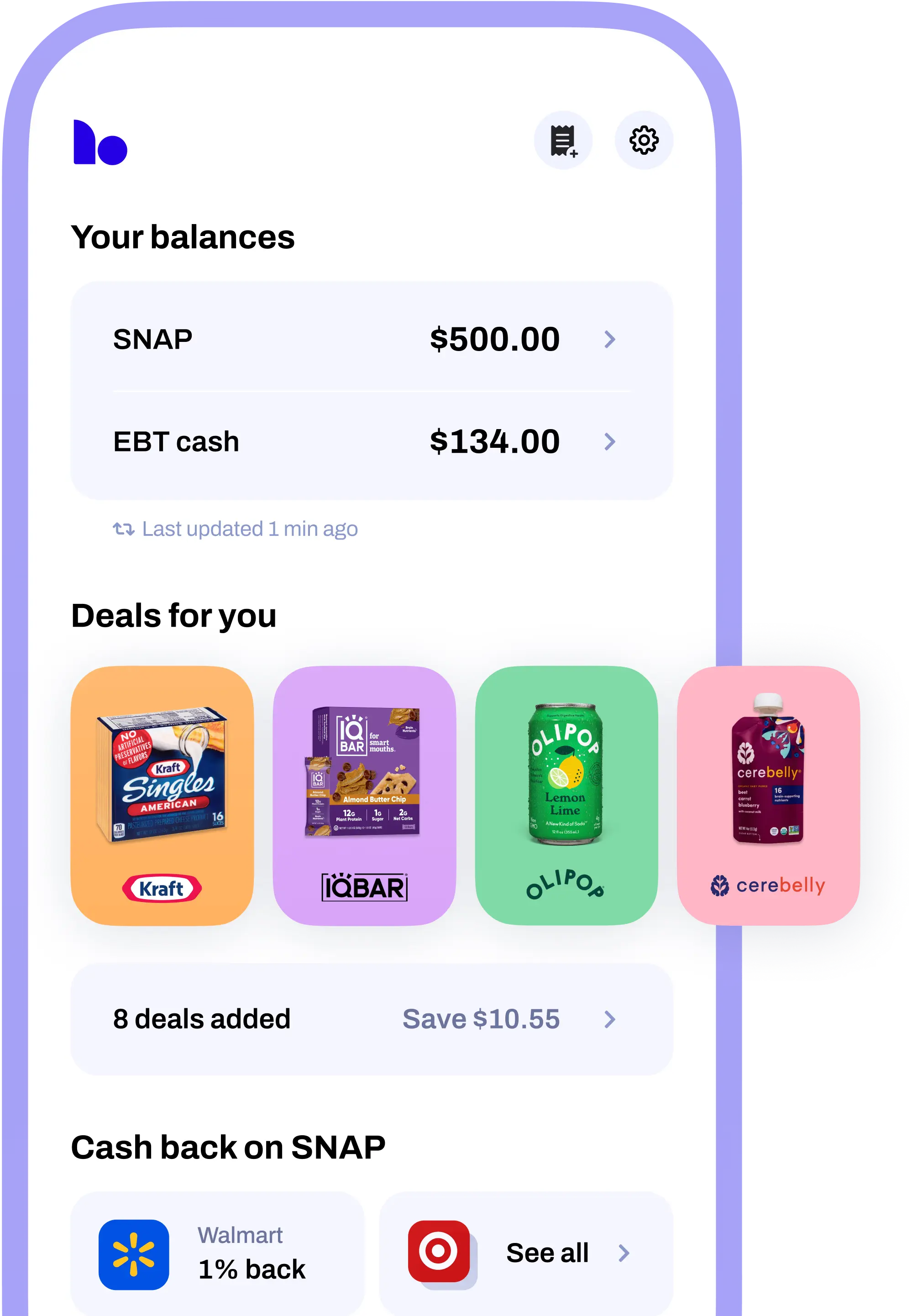
For real-time balance tracking on your phone, you can use the Benny app. It shows your current SNAP and cash balances and offers cashback on eligible purchases at participating stores.
EBT Deposit Schedule in West Virginia
Your SNAP benefits are deposited onto your EBT card during the first nine days of each month. The exact day depends on the first letter of your last name. This staggered schedule helps manage the distribution of funds across the state.
Knowing your deposit date helps you plan your grocery shopping for the month. You can find the specific schedule on the USDA's SNAP page for West Virginia to see which day your benefits will arrive.
Renewing Your SNAP Benefits
SNAP benefits are not indefinite. You must periodically renew them to continue receiving assistance. This process, called recertification, confirms that you are still eligible for the program based on your current circumstances.
The DHHR will mail you a notice when it is time to renew. You will need to complete the paperwork and provide any requested documents by the deadline to avoid a gap in your benefits.
EBT Deposit Schedule in West Virginia
In West Virginia, SNAP benefits are deposited within the first nine days of the month. Your specific payment date is based on the first letter of your last name, helping you plan your grocery budget.
You can find your specific payment date in our West Virginia deposit schedule.
See West Virginia EBT deposit schedule 2026
How to Check Your EBT Card Balance
You can check your EBT balance through the online Cardholder Portal, on your last store or ATM receipt, or by calling the number on your card. The Benny app also shows your balance and offers cashback.
Our guide covers each method for checking your EBT balance in more detail.
Check Your West Virginia EBT Balance
Manage your SNAP Benefits and Get Cashback with Benny
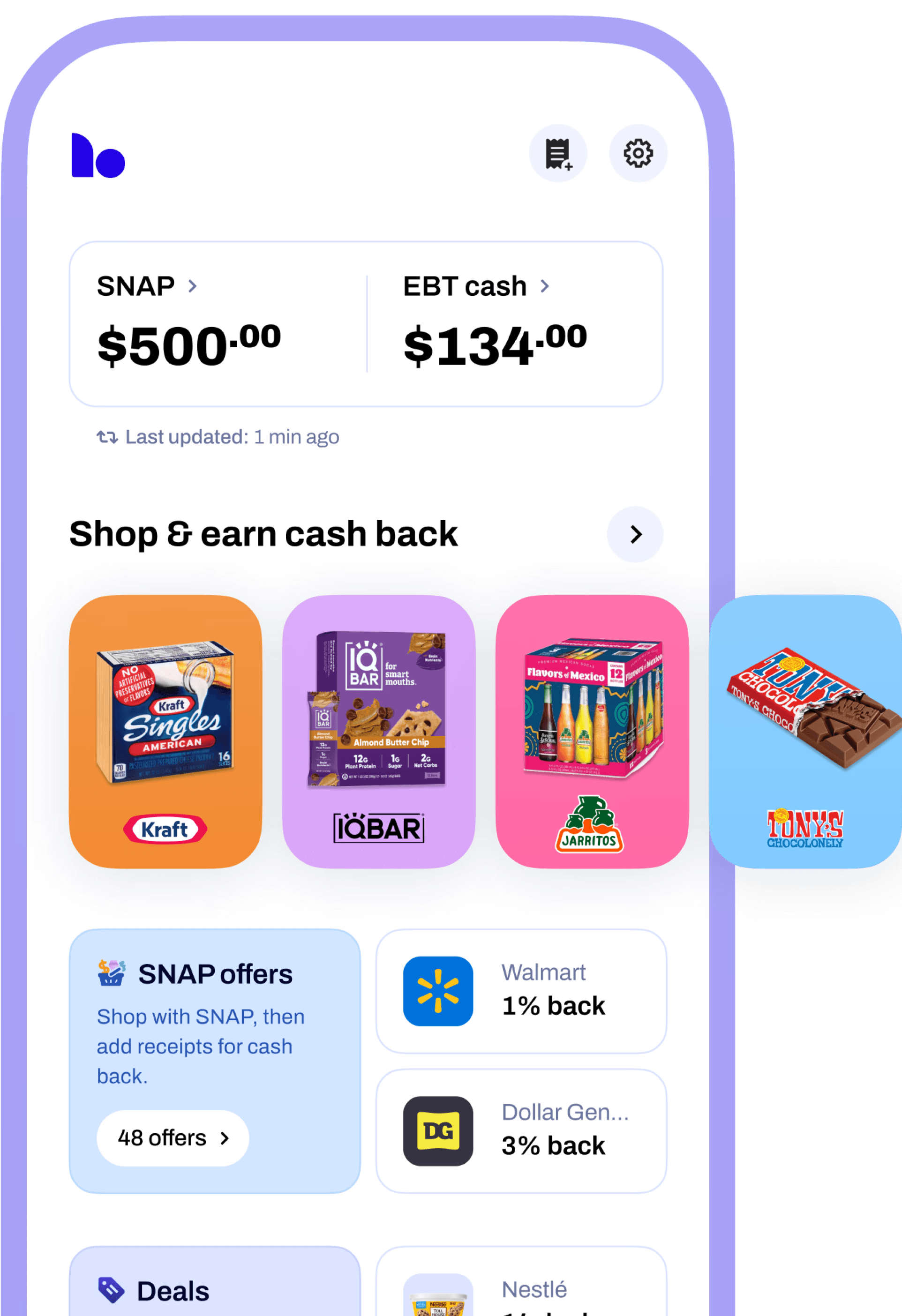
Benny is a free app that helps you track your EBT balance in real-time and get cashback on eligible purchases at stores like Target, Walmart, Kroger, and Costco.
To get started, link your EBT card to the app. After making a purchase, scan your receipt with Benny to receive cashback on SNAP-eligible items.
Download Benny to take control of your spending and get more out of your EBT benefits.
Get 1-3% cash back on groceries and track your EBT Balance
Download the app
How to Renew Your SNAP Benefits
In West Virginia, you must recertify for SNAP benefits every 6 to 12 months. The Department of Health and Human Resources (DHHR) will mail you a recertification packet. You can complete this online, by mail, or in person at your local DHHR office.
You will need to provide documents like recent pay stubs, proof of housing costs, and utility bills. Submitting your recertification on time is the best way to prevent any interruption in your monthly food assistance.
Special SNAP Services in West Virginia
West Virginia offers special SNAP services for specific situations, like natural disasters or summer breaks for children. These programs provide temporary or targeted food assistance.
Disaster Supplemental Nutrition Assistance Program (D-SNAP)
After a federal disaster, D-SNAP provides one month of benefits to households in declared counties with disaster-related losses. Some households may qualify even if they are not normally eligible, as seen after severe flooding in 2025.
Apply in person at temporary D-SNAP sites during the short application window. You will need a photo ID and proof of address. Current SNAP households automatically receive these extra benefits and do not need to apply separately. Details are announced by the state.
Replacement SNAP Benefits For Food Lost In A Disaster
If a power outage or storm spoils food you bought with SNAP, you may be able to get replacement benefits. The USDA sometimes waives the normal 10-day reporting rule for affected counties, as seen in past severe storms.
Contact your county DoHS office or call 1-877-716-1212 during the waiver period. You must submit a replacement request form stating the amount of food lost. No receipts are required for disaster-related losses. More information is available online.
Summer EBT (SEBT) For Children
SEBT provides a $120 grocery benefit per child to help families during summer break. Children are eligible if they receive SNAP, TANF, or free school meals, or if household income is below 185% of the federal poverty line.
Most eligible children are enrolled automatically and receive an SEBT card in the mail. If not, you can file a Summer EBT application with your county DoHS office, along with proof of income, before the deadline.
SNAP Employment & Training (E&T)
This voluntary program helps SNAP recipients build job skills through training, classes, and job placement support. Any SNAP recipient who is able to work can enroll, and it can also be used to meet ABAWD work requirements.
To enroll, call DoHS Customer Service at 1-877-716-1212 or ask your county worker for a referral. A case manager will help you create an employment plan and connect you with approved activities. More details are available online.
Frequently Asked Questions
SHARE
The Supplemental Nutrition Assistance Program, or SNAP, provides monthly funds for groceries. If you're a low-income individual or family in West Virginia, this program can help you buy healthy food.
SNAP Income Limits and Benefit Amounts in West Virginia
Your eligibility for SNAP benefits in West Virginia depends on your household's gross monthly income. These income limits are generally set at 130 percent of the federal poverty level and are updated each year.
The maximum benefit amount you can receive also changes annually to reflect food costs. The figures below are effective from October 1, 2024, to September 30, 2025.
Household of 1: Up to $1,632 gross monthly income; $292 max benefit
Household of 2: Up to $2,215 gross monthly income; $536 max benefit
Household of 3: Up to $2,798 gross monthly income; $768 max benefit
Household of 4: Up to $3,380 gross monthly income; $975 max benefit
Household of 5: Up to $3,963 gross monthly income; $1,158 max benefit
Household of 6: Up to $4,546 gross monthly income; $1,390 max benefit
Household of 7: Up to $5,129 gross monthly income; $1,536 max benefit
Household of 8: Up to $5,712 gross monthly income; $1,756 max benefit
For each additional person: Add $583 to the income limit and $220 to the max benefit.
These amounts are adjusted every federal fiscal year. Future amounts, like the West Virginia SNAP benefits 2026, will be updated closer to that time. For the most current information, visit the official West Virginia SNAP page.
Eligibility Criteria for SNAP in West Virginia
To determine your SNAP benefits eligibility for West Virginia, you must meet several requirements related to your income, residency, and work status.
Income Limits: Your household's gross and net income must fall below specific thresholds, which vary by the number of people in your home.
Residency Requirements: You must live in West Virginia and apply for benefits in the county where you reside.
Citizenship Status: You must be a U.S. citizen or a qualified non-citizen, and all applicants need to provide or apply for a Social Security number.
Work Requirements: Most adults must register for work and accept suitable job offers, with specific rules for able-bodied adults without dependents.
Special Conditions: Households with elderly or disabled members may have different income and asset rules, and college students must meet certain exemptions to qualify.
The West Virginia SNAP benefits eligibility rules can be complex, and you can find full details on the official state website.
Download Benny app to save on groceries
Get coupons from your favorite brands
Earn 1-3% cash back on SNAP and track your EBT balance
Get 1% cash back with the Benny Visa card and build your credit score
Download the app
How to Apply for SNAP Benefits in West Virginia
Applying for SNAP in West Virginia is straightforward. You can submit your application online, in person at a local office, or by mail.
Apply Online
The state’s online portal is the fastest way to apply. You can create an account, fill out the application, and submit your documents electronically from home at any time.
To start, visit the West Virginia SNAP page and follow the instructions to create an account and begin your application.
Apply In Person
If you prefer face-to-face assistance, you can apply in person. A caseworker can help you complete the application and answer any questions you may have during the process.
You must apply in the county where you live. Find your local Department of Health and Human Resources (DHHR) office to submit your application.
Apply By Mail
This method involves downloading and printing the application form. You can fill it out by hand and gather your supporting documents before sending it in for review.
Download the form from the official SNAP website. Once completed, mail it to your county's DHHR office for processing.
How to Contact EBT Customer Service in West Virginia
Phone Number:
1-866-545-6502
Hours:
24 hours a day, 7 days a week
Services:
The helpline assists with card services like balance inquiries or lost cards. For application help, contact your local DHHR office.
See West Virginia EBT Customer Service Contacts
How to Use Your SNAP Benefits in West Virginia
Once you're approved for SNAP, using your benefits effectively means knowing what you can purchase and where you can shop.
What is an EBT Card and How to Use it?
Your Electronic Benefit Transfer (EBT) card is where your SNAP benefits are loaded each month. Think of it just like a debit card. It allows you to pay for groceries at authorized stores without needing cash.
Using your EBT card is simple. At checkout, you just swipe your card and enter your private Personal Identification Number (PIN). The cost of eligible food items is then deducted from your SNAP account balance.
What Can You Buy with SNAP Benefits?
Your SNAP benefits are intended for purchasing food for your household. You can use your EBT card to buy most grocery items, helping you put nutritious meals on the table. Generally, any food item meant to be prepared and eaten at home is eligible for purchase.
Fruits and vegetables
Meat, poultry, and fish
Dairy products
Breads and cereals
Snack foods and non-alcoholic beverages
Seeds and plants that produce food
It's also helpful to know what you can't buy with your EBT card. Benefits do not cover non-food items, alcohol, or hot foods that are ready to eat. Being aware of these limitations can make your shopping trips smoother and avoid issues at checkout.
Alcoholic beverages, cigarettes, or tobacco
Vitamins, medicines, and supplements
Hot foods sold ready-to-eat
Non-food items like pet food, cleaning supplies, or cosmetics
How to Manage Your SNAP Benefits
Staying on top of your SNAP benefits helps you budget effectively and know exactly when your funds will arrive each month.
How to Check Your EBT Balance
You can check your EBT card balance in a few ways. Your last grocery receipt will show the remaining balance. You can also call the EBT customer service number on the back of your card for an automated update.
For real-time balance tracking on your phone, you can use the Benny app. It shows your current SNAP and cash balances and offers cashback on eligible purchases at participating stores.
EBT Deposit Schedule in West Virginia
Your SNAP benefits are deposited onto your EBT card during the first nine days of each month. The exact day depends on the first letter of your last name. This staggered schedule helps manage the distribution of funds across the state.
Knowing your deposit date helps you plan your grocery shopping for the month. You can find the specific schedule on the USDA's SNAP page for West Virginia to see which day your benefits will arrive.
Renewing Your SNAP Benefits
SNAP benefits are not indefinite. You must periodically renew them to continue receiving assistance. This process, called recertification, confirms that you are still eligible for the program based on your current circumstances.
The DHHR will mail you a notice when it is time to renew. You will need to complete the paperwork and provide any requested documents by the deadline to avoid a gap in your benefits.
EBT Deposit Schedule in West Virginia
In West Virginia, SNAP benefits are deposited within the first nine days of the month. Your specific payment date is based on the first letter of your last name, helping you plan your grocery budget.
You can find your specific payment date in our West Virginia deposit schedule.
See West Virginia EBT deposit schedule 2026
How to Check Your EBT Card Balance
You can check your EBT balance through the online Cardholder Portal, on your last store or ATM receipt, or by calling the number on your card. The Benny app also shows your balance and offers cashback.
Our guide covers each method for checking your EBT balance in more detail.
Check Your West Virginia EBT Balance
Manage your SNAP Benefits and Get Cashback with Benny
Benny is a free app that helps you track your EBT balance in real-time and get cashback on eligible purchases at stores like Target, Walmart, Kroger, and Costco.
To get started, link your EBT card to the app. After making a purchase, scan your receipt with Benny to receive cashback on SNAP-eligible items.
Download Benny to take control of your spending and get more out of your EBT benefits.
Get 1-3% cash back on groceries and track your EBT Balance
Download the app
How to Renew Your SNAP Benefits
In West Virginia, you must recertify for SNAP benefits every 6 to 12 months. The Department of Health and Human Resources (DHHR) will mail you a recertification packet. You can complete this online, by mail, or in person at your local DHHR office.
You will need to provide documents like recent pay stubs, proof of housing costs, and utility bills. Submitting your recertification on time is the best way to prevent any interruption in your monthly food assistance.
Special SNAP Services in West Virginia
West Virginia offers special SNAP services for specific situations, like natural disasters or summer breaks for children. These programs provide temporary or targeted food assistance.
Disaster Supplemental Nutrition Assistance Program (D-SNAP)
After a federal disaster, D-SNAP provides one month of benefits to households in declared counties with disaster-related losses. Some households may qualify even if they are not normally eligible, as seen after severe flooding in 2025.
Apply in person at temporary D-SNAP sites during the short application window. You will need a photo ID and proof of address. Current SNAP households automatically receive these extra benefits and do not need to apply separately. Details are announced by the state.
Replacement SNAP Benefits For Food Lost In A Disaster
If a power outage or storm spoils food you bought with SNAP, you may be able to get replacement benefits. The USDA sometimes waives the normal 10-day reporting rule for affected counties, as seen in past severe storms.
Contact your county DoHS office or call 1-877-716-1212 during the waiver period. You must submit a replacement request form stating the amount of food lost. No receipts are required for disaster-related losses. More information is available online.
Summer EBT (SEBT) For Children
SEBT provides a $120 grocery benefit per child to help families during summer break. Children are eligible if they receive SNAP, TANF, or free school meals, or if household income is below 185% of the federal poverty line.
Most eligible children are enrolled automatically and receive an SEBT card in the mail. If not, you can file a Summer EBT application with your county DoHS office, along with proof of income, before the deadline.
SNAP Employment & Training (E&T)
This voluntary program helps SNAP recipients build job skills through training, classes, and job placement support. Any SNAP recipient who is able to work can enroll, and it can also be used to meet ABAWD work requirements.
To enroll, call DoHS Customer Service at 1-877-716-1212 or ask your county worker for a referral. A case manager will help you create an employment plan and connect you with approved activities. More details are available online.
Frequently Asked Questions
SHARE
The Supplemental Nutrition Assistance Program, or SNAP, provides monthly funds for groceries. If you're a low-income individual or family in West Virginia, this program can help you buy healthy food.
SNAP Income Limits and Benefit Amounts in West Virginia
Your eligibility for SNAP benefits in West Virginia depends on your household's gross monthly income. These income limits are generally set at 130 percent of the federal poverty level and are updated each year.
The maximum benefit amount you can receive also changes annually to reflect food costs. The figures below are effective from October 1, 2024, to September 30, 2025.
Household of 1: Up to $1,632 gross monthly income; $292 max benefit
Household of 2: Up to $2,215 gross monthly income; $536 max benefit
Household of 3: Up to $2,798 gross monthly income; $768 max benefit
Household of 4: Up to $3,380 gross monthly income; $975 max benefit
Household of 5: Up to $3,963 gross monthly income; $1,158 max benefit
Household of 6: Up to $4,546 gross monthly income; $1,390 max benefit
Household of 7: Up to $5,129 gross monthly income; $1,536 max benefit
Household of 8: Up to $5,712 gross monthly income; $1,756 max benefit
For each additional person: Add $583 to the income limit and $220 to the max benefit.
These amounts are adjusted every federal fiscal year. Future amounts, like the West Virginia SNAP benefits 2026, will be updated closer to that time. For the most current information, visit the official West Virginia SNAP page.
Eligibility Criteria for SNAP in West Virginia
To determine your SNAP benefits eligibility for West Virginia, you must meet several requirements related to your income, residency, and work status.
Income Limits: Your household's gross and net income must fall below specific thresholds, which vary by the number of people in your home.
Residency Requirements: You must live in West Virginia and apply for benefits in the county where you reside.
Citizenship Status: You must be a U.S. citizen or a qualified non-citizen, and all applicants need to provide or apply for a Social Security number.
Work Requirements: Most adults must register for work and accept suitable job offers, with specific rules for able-bodied adults without dependents.
Special Conditions: Households with elderly or disabled members may have different income and asset rules, and college students must meet certain exemptions to qualify.
The West Virginia SNAP benefits eligibility rules can be complex, and you can find full details on the official state website.
Download Benny app to save on groceries
Get coupons from your favorite brands
Earn 1-3% cash back on SNAP and track your EBT balance
Get 1% cash back with the Benny Visa card and build your credit score
Download the app
How to Apply for SNAP Benefits in West Virginia
Applying for SNAP in West Virginia is straightforward. You can submit your application online, in person at a local office, or by mail.
Apply Online
The state’s online portal is the fastest way to apply. You can create an account, fill out the application, and submit your documents electronically from home at any time.
To start, visit the West Virginia SNAP page and follow the instructions to create an account and begin your application.
Apply In Person
If you prefer face-to-face assistance, you can apply in person. A caseworker can help you complete the application and answer any questions you may have during the process.
You must apply in the county where you live. Find your local Department of Health and Human Resources (DHHR) office to submit your application.
Apply By Mail
This method involves downloading and printing the application form. You can fill it out by hand and gather your supporting documents before sending it in for review.
Download the form from the official SNAP website. Once completed, mail it to your county's DHHR office for processing.
How to Contact EBT Customer Service in West Virginia
Phone Number:
1-866-545-6502
Hours:
24 hours a day, 7 days a week
Services:
The helpline assists with card services like balance inquiries or lost cards. For application help, contact your local DHHR office.
See West Virginia EBT Customer Service Contacts
How to Use Your SNAP Benefits in West Virginia
Once you're approved for SNAP, using your benefits effectively means knowing what you can purchase and where you can shop.
What is an EBT Card and How to Use it?
Your Electronic Benefit Transfer (EBT) card is where your SNAP benefits are loaded each month. Think of it just like a debit card. It allows you to pay for groceries at authorized stores without needing cash.
Using your EBT card is simple. At checkout, you just swipe your card and enter your private Personal Identification Number (PIN). The cost of eligible food items is then deducted from your SNAP account balance.
What Can You Buy with SNAP Benefits?
Your SNAP benefits are intended for purchasing food for your household. You can use your EBT card to buy most grocery items, helping you put nutritious meals on the table. Generally, any food item meant to be prepared and eaten at home is eligible for purchase.
Fruits and vegetables
Meat, poultry, and fish
Dairy products
Breads and cereals
Snack foods and non-alcoholic beverages
Seeds and plants that produce food
It's also helpful to know what you can't buy with your EBT card. Benefits do not cover non-food items, alcohol, or hot foods that are ready to eat. Being aware of these limitations can make your shopping trips smoother and avoid issues at checkout.
Alcoholic beverages, cigarettes, or tobacco
Vitamins, medicines, and supplements
Hot foods sold ready-to-eat
Non-food items like pet food, cleaning supplies, or cosmetics
How to Manage Your SNAP Benefits
Staying on top of your SNAP benefits helps you budget effectively and know exactly when your funds will arrive each month.
How to Check Your EBT Balance
You can check your EBT card balance in a few ways. Your last grocery receipt will show the remaining balance. You can also call the EBT customer service number on the back of your card for an automated update.
For real-time balance tracking on your phone, you can use the Benny app. It shows your current SNAP and cash balances and offers cashback on eligible purchases at participating stores.
EBT Deposit Schedule in West Virginia
Your SNAP benefits are deposited onto your EBT card during the first nine days of each month. The exact day depends on the first letter of your last name. This staggered schedule helps manage the distribution of funds across the state.
Knowing your deposit date helps you plan your grocery shopping for the month. You can find the specific schedule on the USDA's SNAP page for West Virginia to see which day your benefits will arrive.
Renewing Your SNAP Benefits
SNAP benefits are not indefinite. You must periodically renew them to continue receiving assistance. This process, called recertification, confirms that you are still eligible for the program based on your current circumstances.
The DHHR will mail you a notice when it is time to renew. You will need to complete the paperwork and provide any requested documents by the deadline to avoid a gap in your benefits.
EBT Deposit Schedule in West Virginia
In West Virginia, SNAP benefits are deposited within the first nine days of the month. Your specific payment date is based on the first letter of your last name, helping you plan your grocery budget.
You can find your specific payment date in our West Virginia deposit schedule.
See West Virginia EBT deposit schedule 2026
How to Check Your EBT Card Balance
You can check your EBT balance through the online Cardholder Portal, on your last store or ATM receipt, or by calling the number on your card. The Benny app also shows your balance and offers cashback.
Our guide covers each method for checking your EBT balance in more detail.
Check Your West Virginia EBT Balance
Manage your SNAP Benefits and Get Cashback with Benny
Benny is a free app that helps you track your EBT balance in real-time and get cashback on eligible purchases at stores like Target, Walmart, Kroger, and Costco.
To get started, link your EBT card to the app. After making a purchase, scan your receipt with Benny to receive cashback on SNAP-eligible items.
Download Benny to take control of your spending and get more out of your EBT benefits.
Get 1-3% cash back on groceries and track your EBT Balance
Download the app
How to Renew Your SNAP Benefits
In West Virginia, you must recertify for SNAP benefits every 6 to 12 months. The Department of Health and Human Resources (DHHR) will mail you a recertification packet. You can complete this online, by mail, or in person at your local DHHR office.
You will need to provide documents like recent pay stubs, proof of housing costs, and utility bills. Submitting your recertification on time is the best way to prevent any interruption in your monthly food assistance.
Special SNAP Services in West Virginia
West Virginia offers special SNAP services for specific situations, like natural disasters or summer breaks for children. These programs provide temporary or targeted food assistance.
Disaster Supplemental Nutrition Assistance Program (D-SNAP)
After a federal disaster, D-SNAP provides one month of benefits to households in declared counties with disaster-related losses. Some households may qualify even if they are not normally eligible, as seen after severe flooding in 2025.
Apply in person at temporary D-SNAP sites during the short application window. You will need a photo ID and proof of address. Current SNAP households automatically receive these extra benefits and do not need to apply separately. Details are announced by the state.
Replacement SNAP Benefits For Food Lost In A Disaster
If a power outage or storm spoils food you bought with SNAP, you may be able to get replacement benefits. The USDA sometimes waives the normal 10-day reporting rule for affected counties, as seen in past severe storms.
Contact your county DoHS office or call 1-877-716-1212 during the waiver period. You must submit a replacement request form stating the amount of food lost. No receipts are required for disaster-related losses. More information is available online.
Summer EBT (SEBT) For Children
SEBT provides a $120 grocery benefit per child to help families during summer break. Children are eligible if they receive SNAP, TANF, or free school meals, or if household income is below 185% of the federal poverty line.
Most eligible children are enrolled automatically and receive an SEBT card in the mail. If not, you can file a Summer EBT application with your county DoHS office, along with proof of income, before the deadline.
SNAP Employment & Training (E&T)
This voluntary program helps SNAP recipients build job skills through training, classes, and job placement support. Any SNAP recipient who is able to work can enroll, and it can also be used to meet ABAWD work requirements.
To enroll, call DoHS Customer Service at 1-877-716-1212 or ask your county worker for a referral. A case manager will help you create an employment plan and connect you with approved activities. More details are available online.
Frequently Asked Questions
SHARE
The Supplemental Nutrition Assistance Program, or SNAP, provides monthly funds for groceries. If you're a low-income individual or family in West Virginia, this program can help you buy healthy food.
SNAP Income Limits and Benefit Amounts in West Virginia
Your eligibility for SNAP benefits in West Virginia depends on your household's gross monthly income. These income limits are generally set at 130 percent of the federal poverty level and are updated each year.
The maximum benefit amount you can receive also changes annually to reflect food costs. The figures below are effective from October 1, 2024, to September 30, 2025.
Household of 1: Up to $1,632 gross monthly income; $292 max benefit
Household of 2: Up to $2,215 gross monthly income; $536 max benefit
Household of 3: Up to $2,798 gross monthly income; $768 max benefit
Household of 4: Up to $3,380 gross monthly income; $975 max benefit
Household of 5: Up to $3,963 gross monthly income; $1,158 max benefit
Household of 6: Up to $4,546 gross monthly income; $1,390 max benefit
Household of 7: Up to $5,129 gross monthly income; $1,536 max benefit
Household of 8: Up to $5,712 gross monthly income; $1,756 max benefit
For each additional person: Add $583 to the income limit and $220 to the max benefit.
These amounts are adjusted every federal fiscal year. Future amounts, like the West Virginia SNAP benefits 2026, will be updated closer to that time. For the most current information, visit the official West Virginia SNAP page.
Eligibility Criteria for SNAP in West Virginia
To determine your SNAP benefits eligibility for West Virginia, you must meet several requirements related to your income, residency, and work status.
Income Limits: Your household's gross and net income must fall below specific thresholds, which vary by the number of people in your home.
Residency Requirements: You must live in West Virginia and apply for benefits in the county where you reside.
Citizenship Status: You must be a U.S. citizen or a qualified non-citizen, and all applicants need to provide or apply for a Social Security number.
Work Requirements: Most adults must register for work and accept suitable job offers, with specific rules for able-bodied adults without dependents.
Special Conditions: Households with elderly or disabled members may have different income and asset rules, and college students must meet certain exemptions to qualify.
The West Virginia SNAP benefits eligibility rules can be complex, and you can find full details on the official state website.
Download Benny app to save on groceries
Get coupons from your favorite brands
Earn 1-3% cash back on SNAP and track your EBT balance
Get 1% cash back with the Benny Visa card and build your credit score
Download the app
How to Apply for SNAP Benefits in West Virginia
Applying for SNAP in West Virginia is straightforward. You can submit your application online, in person at a local office, or by mail.
Apply Online
The state’s online portal is the fastest way to apply. You can create an account, fill out the application, and submit your documents electronically from home at any time.
To start, visit the West Virginia SNAP page and follow the instructions to create an account and begin your application.
Apply In Person
If you prefer face-to-face assistance, you can apply in person. A caseworker can help you complete the application and answer any questions you may have during the process.
You must apply in the county where you live. Find your local Department of Health and Human Resources (DHHR) office to submit your application.
Apply By Mail
This method involves downloading and printing the application form. You can fill it out by hand and gather your supporting documents before sending it in for review.
Download the form from the official SNAP website. Once completed, mail it to your county's DHHR office for processing.
How to Contact EBT Customer Service in West Virginia
Phone Number:
1-866-545-6502
Hours:
24 hours a day, 7 days a week
Services:
The helpline assists with card services like balance inquiries or lost cards. For application help, contact your local DHHR office.
See West Virginia EBT Customer Service Contacts
How to Use Your SNAP Benefits in West Virginia
Once you're approved for SNAP, using your benefits effectively means knowing what you can purchase and where you can shop.
What is an EBT Card and How to Use it?
Your Electronic Benefit Transfer (EBT) card is where your SNAP benefits are loaded each month. Think of it just like a debit card. It allows you to pay for groceries at authorized stores without needing cash.
Using your EBT card is simple. At checkout, you just swipe your card and enter your private Personal Identification Number (PIN). The cost of eligible food items is then deducted from your SNAP account balance.
What Can You Buy with SNAP Benefits?
Your SNAP benefits are intended for purchasing food for your household. You can use your EBT card to buy most grocery items, helping you put nutritious meals on the table. Generally, any food item meant to be prepared and eaten at home is eligible for purchase.
Fruits and vegetables
Meat, poultry, and fish
Dairy products
Breads and cereals
Snack foods and non-alcoholic beverages
Seeds and plants that produce food
It's also helpful to know what you can't buy with your EBT card. Benefits do not cover non-food items, alcohol, or hot foods that are ready to eat. Being aware of these limitations can make your shopping trips smoother and avoid issues at checkout.
Alcoholic beverages, cigarettes, or tobacco
Vitamins, medicines, and supplements
Hot foods sold ready-to-eat
Non-food items like pet food, cleaning supplies, or cosmetics
How to Manage Your SNAP Benefits
Staying on top of your SNAP benefits helps you budget effectively and know exactly when your funds will arrive each month.
How to Check Your EBT Balance
You can check your EBT card balance in a few ways. Your last grocery receipt will show the remaining balance. You can also call the EBT customer service number on the back of your card for an automated update.
For real-time balance tracking on your phone, you can use the Benny app. It shows your current SNAP and cash balances and offers cashback on eligible purchases at participating stores.
EBT Deposit Schedule in West Virginia
Your SNAP benefits are deposited onto your EBT card during the first nine days of each month. The exact day depends on the first letter of your last name. This staggered schedule helps manage the distribution of funds across the state.
Knowing your deposit date helps you plan your grocery shopping for the month. You can find the specific schedule on the USDA's SNAP page for West Virginia to see which day your benefits will arrive.
Renewing Your SNAP Benefits
SNAP benefits are not indefinite. You must periodically renew them to continue receiving assistance. This process, called recertification, confirms that you are still eligible for the program based on your current circumstances.
The DHHR will mail you a notice when it is time to renew. You will need to complete the paperwork and provide any requested documents by the deadline to avoid a gap in your benefits.
EBT Deposit Schedule in West Virginia
In West Virginia, SNAP benefits are deposited within the first nine days of the month. Your specific payment date is based on the first letter of your last name, helping you plan your grocery budget.
You can find your specific payment date in our West Virginia deposit schedule.
See West Virginia EBT deposit schedule 2026
How to Check Your EBT Card Balance
You can check your EBT balance through the online Cardholder Portal, on your last store or ATM receipt, or by calling the number on your card. The Benny app also shows your balance and offers cashback.
Our guide covers each method for checking your EBT balance in more detail.
Check Your West Virginia EBT Balance
Manage your SNAP Benefits and Get Cashback with Benny
Benny is a free app that helps you track your EBT balance in real-time and get cashback on eligible purchases at stores like Target, Walmart, Kroger, and Costco.
To get started, link your EBT card to the app. After making a purchase, scan your receipt with Benny to receive cashback on SNAP-eligible items.
Download Benny to take control of your spending and get more out of your EBT benefits.
Get 1-3% cash back on groceries and track your EBT Balance
Download the app
How to Renew Your SNAP Benefits
In West Virginia, you must recertify for SNAP benefits every 6 to 12 months. The Department of Health and Human Resources (DHHR) will mail you a recertification packet. You can complete this online, by mail, or in person at your local DHHR office.
You will need to provide documents like recent pay stubs, proof of housing costs, and utility bills. Submitting your recertification on time is the best way to prevent any interruption in your monthly food assistance.
Special SNAP Services in West Virginia
West Virginia offers special SNAP services for specific situations, like natural disasters or summer breaks for children. These programs provide temporary or targeted food assistance.
Disaster Supplemental Nutrition Assistance Program (D-SNAP)
After a federal disaster, D-SNAP provides one month of benefits to households in declared counties with disaster-related losses. Some households may qualify even if they are not normally eligible, as seen after severe flooding in 2025.
Apply in person at temporary D-SNAP sites during the short application window. You will need a photo ID and proof of address. Current SNAP households automatically receive these extra benefits and do not need to apply separately. Details are announced by the state.
Replacement SNAP Benefits For Food Lost In A Disaster
If a power outage or storm spoils food you bought with SNAP, you may be able to get replacement benefits. The USDA sometimes waives the normal 10-day reporting rule for affected counties, as seen in past severe storms.
Contact your county DoHS office or call 1-877-716-1212 during the waiver period. You must submit a replacement request form stating the amount of food lost. No receipts are required for disaster-related losses. More information is available online.
Summer EBT (SEBT) For Children
SEBT provides a $120 grocery benefit per child to help families during summer break. Children are eligible if they receive SNAP, TANF, or free school meals, or if household income is below 185% of the federal poverty line.
Most eligible children are enrolled automatically and receive an SEBT card in the mail. If not, you can file a Summer EBT application with your county DoHS office, along with proof of income, before the deadline.
SNAP Employment & Training (E&T)
This voluntary program helps SNAP recipients build job skills through training, classes, and job placement support. Any SNAP recipient who is able to work can enroll, and it can also be used to meet ABAWD work requirements.
To enroll, call DoHS Customer Service at 1-877-716-1212 or ask your county worker for a referral. A case manager will help you create an employment plan and connect you with approved activities. More details are available online.